
Overview
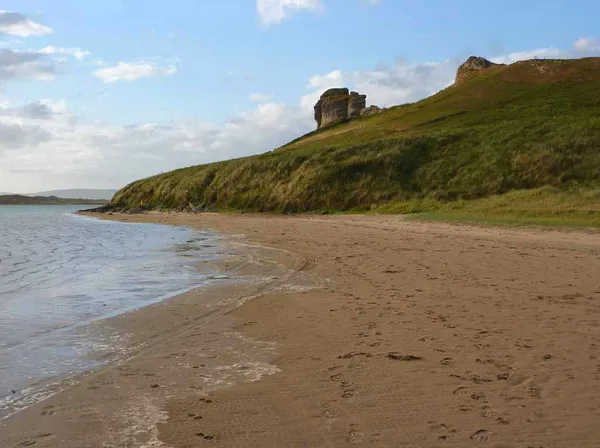
Carrahane is where Banna Strand runs out. The long north-Kerry beach tapers at its southern end into a wide tidal bay, where the sand gives way to saltmarsh and flats that empty and fill twice a day. It sits northwest of Tralee, and the reason to know it is the birds.
Where the beach meets the saltmarsh
The National Parks and Wildlife Service protects habitats here, including the intertidal mud and sand where wading birds feed. For a beach walk, use the public facilities at Banna Strand and stay on the main beach. Give the saltmarsh, dunes and feeding birds room, and keep clear of the tidal channel.
The birdwatching
Carrahane has a name among Irish birders out of all proportion to its size. The sheltered flats are a feeding ground for waders, and autumn passage is the time people talk about, when the flats can hold curlew, godwit and the occasional rarity that draws birdwatchers from far afield. Watch from the edges and let the birds feed undisturbed.
If you don’t carry binoculars, be honest with yourself about what’s here: a quiet, exposed bay and not much to do beyond watch the tide turn. That’s the appeal, or it isn’t. For a Kerry beach with sand, Banna Strand proper, just north, is the better call.
Tides
The one real caution is the tide. The flats can look firm and are not a place to wander; the tidal channel fills quickly, so keep clear of it and check a tide table before you go near the water.
Nearby
- Banna Strand – the beach that runs north from Carrahane, with the dunes where Roger Casement came ashore from a German submarine in April 1916. A monument marks the landing just north of here. See Discover Ireland for visitor information.
- Ardfert – the village to the east, built around the ruins of Ardfert Cathedral and its two medieval churches.
- Tralee Golf Club – the championship links lie along the same stretch of coast.