
Overview
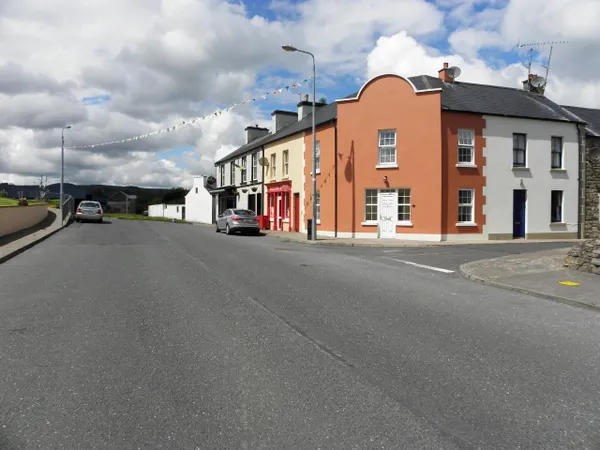
Drumkeeran (also spelled Drumkeerin, the spelling the local heritage centre uses) is a working village rather than a tourist town, and that is largely the point of it. It sits where the R280 and R200 meet in the drumlin hills at the foot of Corry Mountain, north-west of Lough Allen, the lake that brings most visitors turning off here in the first place. If you have a single afternoon, spend it on the water or on a stretch of the Miner’s Way rather than in the village, which is a handful of pubs, a shop and a heritage centre, and honest about it.
History & Background
The village’s origins are tied to the agricultural and industrial shifts of the 18th and 19th centuries. Historical surveys note that the area was once heavily wooded, but extensive deforestation occurred in the late 1700s to supply charcoal for the ironworks around Slieve Anierin. By 1782, large piles of cleared timber had already transformed the landscape into the open drumlin fields seen today.
Throughout the 19th and early 20th centuries, Drumkeeran hosted annual fairs that drew farmers and traders from across the parish. A 1925 census recorded 54 houses in the village, eleven of which held liquor licences, underscoring its role as a local social and commercial crossroads. Community-led development has driven modern growth: the Drumkeerin Development Association formed around 1970, followed by the Community Council in 1986 and the Drumkeerin Tourist and Development Company in 1992, which helped establish the visitor facilities available today. The local GAA club, founded in 1933, continues to anchor community life.
What to See & Do
Drumkeerin Heritage Centre
The Drumkeerin Heritage Centre occupies a reconstructed Irish cottage and farmyard, with displays about rural life in Leitrim. Visitors can explore a recreated sweat house, pig sty, historic garden and a collection of vintage agricultural machinery. The on-site Donald Fidgeon Resource Centre features displays and memorabilia detailing the area’s involvement in the 1798 Rebellion. Fáilte Ireland lists the centre. Opening times and guided tours vary, so confirm opening and access before making a trip.
Walking & Cycling
Drumkeeran sits on a mapped section of the Miner’s Way and Historical Trail. Sport Ireland’s Miner’s Way and Historical Trail maps include the section from Lynch’s Mountain to Drumkeeran. The route winds through the drumlin terrain, with steady climbs and views over Lough Allen, the Iron Mountains and the Arigna range. Plan your return before starting a linear section and follow local route notices. Shorter walks and cycles around the village and the lakeshore make an easy alternative if you do not want a full stage.
Fishing & Water Sports
Lough Allen is known for pike, brown trout, bream and roach. Inland Fisheries Ireland describes bank fishing and access around the lake. Access arrangements vary by shore, and some approaches cross private land, so use named access points and check current permissions for the water and species you plan to fish. For kayaking, stand-up paddleboarding and guided tours, the Lough Allen Adventure centre at Drumshanbo is the nearest operator; check what it currently offers before you set out.
Golf & Equestrian
Golfers can find courses within a short drive, including Lough Allen Golf Club in Drumshanbo; check with the club before you go. Equestrian visitors can look for trail rides and lessons with local riding schools across the open drumlin countryside; check with them directly for current availability.
Architectural Highlights
The village’s main street is lined with three historic churches that reflect Leitrim’s multi-denominational heritage:
- St Brigid’s Roman Catholic Church (1869) – a straightforward stone building with a simple bell-cote.
- St Joseph’s Church of Ireland (1833) – an early-19th-century parish church retaining original stained-glass windows.
- St Patricia’s Presbyterian Church (1844) – a compact rectangular structure that continues to host regular services.
Notable People
The area has a strong tradition in Irish music and literature. Celebrated flautist John McKenna (1880–1947) was born in the parish, and his legacy is celebrated with the John McKenna Festival, held in early summer in recent years. Dates change, so check before planning a trip around it. Traditional singer Mary McPartlan (1955–2020) also hailed from the area, while contemporary poet and playwright Vincent Woods (born 1960) grew up in the nearby townland of Tarmon.
McKenna emigrated to New York and made some of the defining recordings of Irish traditional music in the 1920s and 30s.
Practical Information
Getting There
Drumkeeran is reached by car via the R280 and R200. Public transport is limited, so use the TFI journey planner to check services to Drumkeeran and confirm your return before travelling.
Accommodation
Self-catering cottages and holiday homes are available around the north-western shore of Lough Allen, within reach of the village and the lakeshore, and there are alternative stays such as yurts in the surrounding countryside. Check availability and facilities with the operators directly.
Dining & Nightlife
Drumkeeran has a handful of traditional pubs, including Davitts, Forde’s Inn and the Market Bar. Music sessions are a feature of Irish village pubs, but days and times change, so ask locally before building an evening around one. The village also has a small shop, so it is straightforward to stock up for day trips.
Nearby Attractions
- Creevelea Abbey – A 16th-century Franciscan friary (founded 1508) on the Bonet river near Dromahair, a short drive north-west.
- Glencar Waterfall – A striking 15-metre cascade in the Glencar Valley, ideal for a short scenic walk.
- Battlebridge – A historic riverside settlement on the River Shannon offering camping, pubs and water-based activities.
Seasonal Highlights & Accessibility
The John McKenna Traditional Music Festival is the one date worth planning around, if its dates suit you. The heritage centre’s cottage may have steps at the entrance, so anyone with mobility restrictions should ring ahead.