
Overview
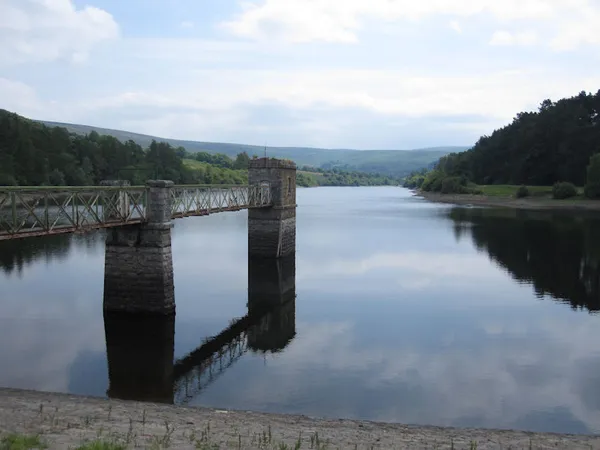
The two lakes at the bottom of Glenasmole aren’t natural. They are Victorian reservoirs, built between 1883 and 1887, and they are still part of Dublin’s drinking-water supply. The valley sits between the Dublin Mountains and the edge of Wicklow National Park, above Tallaght, and for all that municipal work it stays a quiet, workaday escape for walkers, birdwatchers and families. The stone channel and bridges are part of what makes the walk distinctive. Follow the marked paths along the water and leave the reservoirs to their working purpose.
History and mythology
The valley itself dates to the last Ice Age, when retreating glaciers carved its U-shape. The name carries two possible meanings: Gleann na Smól(aigh), ‘valley of the thrush’, or Gleann na Smóil, ‘valley of the burnt patch’, a nod to the legendary burning of the Dá Derga hostel in early Irish myth. Nearby Bohernabreena comes from Bóthar na Bruíne, ‘the road to the mansion’, tying the place to old tales of hospitality and chieftains.
The area is woven into the lore of Fionn Mac Cumhaill and Na Fianna. Local tradition holds that Fionn hunted red deer and the now-extinct great Irish elk through these woods, feasting afterwards on the summit of Seefin, whose name means ‘the seat of Finn’. Another legend puts the poet-warrior Oisín here: returning from Tír na nÓg, he leant from his white horse to help locals lift a boulder, touched Irish soil, and aged 300 years in an instant.
The reservoirs are the tangible history. The Bohernabreena Waterworks were built in the 1880s to tame the flood-prone River Dodder, power the mills downstream and supply clean water to Rathmines. The system still runs to its original logic: the upper lake collects the clearer, non-peaty water for drinking, the lower holds the peaty runoff that once served the mills, and a stone-lined channel links the two before the water reaches the treatment works at Ballyboden. Near the lower reservoir stand the ruins of St Anne’s Graveyard, where the church was in use until the mid-16th century. The graveyard is closed to burials because of its closeness to the water supply.

What to see and do
The reservoir walks
The Dublin Mountains Partnership route is the Upper Reservoir Loop. It is 8.5 km, marked orange, and starts and finishes at the Bohernabreena waterworks car park. It follows the water through woodland and open valley and along the historic stone channel. The partnership’s route map is useful where the paths meet, especially if you are also following the yellow markers of the Dublin Mountains Way.
The partnership also lists access to St Anne’s graveyard, where the ruined Kilnasantan church stands above the reservoirs. Follow signs on the ground and stay on the paths through the valley.
Dublin Mountains Way
For a longer walk, the Dublin Mountains Way continues from Glenasmole into Kiltipper Park towards Tallaght, following the River Dodder. Look for the yellow markers. Check the partnership’s current route and transport notes before planning a one-way walk.
Flora and fauna
The valley’s damp, peat-rich soils and open water make it a Special Area of Conservation. Spring brings wild orchids, including early purple and frog orchids, across extensive molinia meadows, and the petrifying springs leave mineral crusts where the calcium-rich water evaporates.
The birdlife is the reliable draw. Along the water you’ll see herons, moorhens, grey wagtails and dippers, with the odd kingfisher; meadow pipits and skylarks work the open grassland, and winter brings waders such as curlew and snipe. Fishing is by permit through the local angling club.
Practical information
Parking and access
Parking is the thing to plan. The Dublin Mountains Partnership lists 15 spaces and no toilets at the Bohernabreena waterworks trailhead, so the car park can fill, especially at weekends. Don’t park on the surrounding roads. Check the partnership’s Glenasmole page for current access notes before you go.
Public transport
Check the TFI Live app or the Local Link timetable for current rural bus services to the valley, as these can be thin.
Amenities and accessibility
There are no toilets at the waterworks trailhead. The loop trails are uneven and boggy in places, and the route is not suited to buggies. Keep dogs under control, for the ground-nesting birds and the livestock.
Visitor tips
- Arrive early at weekends for parking and quiet.
- Wear waterproof boots; the trails turn muddy after rain.
- Download offline maps before you set out.
Nearby highlights
- Cruagh Wood – a woodland loop with views over Dublin.
- Blessington – a lakeside town with the Blessington Greenway and Russborough House close by.
- Ticknock – the Fairy Castle passage tomb and views over Dublin Bay.
Late spring catches the orchids; autumn turns the deciduous woods and sets them reflecting in the reservoirs.