
Overview
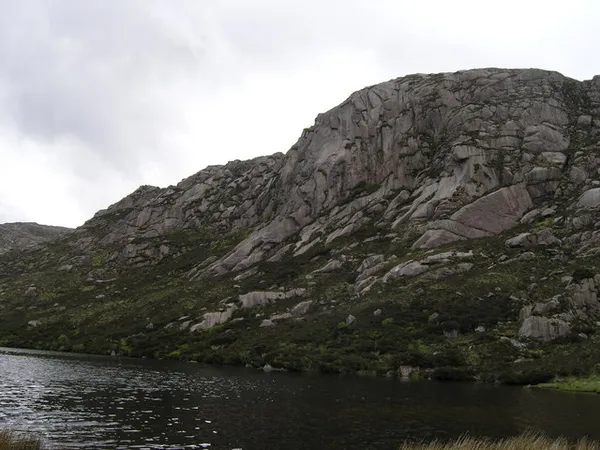
Lough Belshade sits in a shallow, wind-swept basin in the Bluestack Mountains, not far from Donegal Town. Often referred to locally as the Jewel of the Bluestacks, the lake is defined by its striking geography: a round, treeless island sits in the centre, surrounded by water and framed by steep granite cliffs. There are no boardwalks, ticket booths or café stops here. It is a rugged, highland landscape that feels deliberately off the beaten track, and a place to watch the light change over a quiet Donegal valley.
History & Legends
The name Lough Belshade likely traces back to 1593, a turbulent period in Donegal’s history. According to local folklore, English raiders forced friars from a nearby abbey to flee. As they scrambled towards the lake, a sudden mist rolled in, concealing a causeway that led to the central island. The friars supposedly hid church valuables there before the waters receded and the causeway vanished. A local tradition recorded in the Schools’ Collection also tells of treasure hidden on the island.
Another persistent tale links the island to the O’Donnells, the ruling Gaelic family of Donegal until the Flight of the Earls in 1607. Locals say the O’Donnells used the island as a makeshift prison, cutting off inmates with the changing tides and weather. Whether the stories are rooted in fact or born from generations of hill-walkers sharing tales around campfires, they add a tangible layer of atmosphere to the landscape.
Landscape & Wildlife
Geologically, Lough Belshade is a textbook example of glacial activity. As the last Ice Age retreated, massive ice sheets carved the Eglish Fault through the bedrock, leaving behind a fault-line lake surrounded by drumlins and ancient granite slabs. The surrounding bogland supports a distinct highland ecosystem: bell heather and ling heather carpet the slopes, while Sphagnum moss, sundew and butterwort thrive in the wetter hollows.
Wildlife sightings are common for those who move quietly. Otters turn up at the nearby Lough Nacollum, ravens ride the updrafts along the cliffs, and golden eagles have been reported over the high ground. In late spring, the adjacent forest floor turns into a carpet of bluebells, primroses and bilberry.
Walking Routes
For walking in the area, use the marked Bluestack Way and check its published route before you go. The waymarked trail is separate from the lake. Stay on the published route and respect private land, gates and access signs.
The Bluestacks include unmarked bog sections and steep ground, and the weather in the Bluestacks shifts quickly, so confident navigation is essential in this country.
Rock Climbing
The granite crags around the lake, above all Belshade Buttress, have long been known to Irish climbers, and the Irish Mountaineering Club has written about the area. This page does not give approach or access details. Mountaineering Ireland has documented a closure of the Edergole commonage, and no reopening has been confirmed. See the Mountaineering Ireland access updates and do not use the commonage.
Access & Getting There
Current access to the lake has not been verified, and no approach is promoted here. Do not cross private land, farmyards or commonage to reach it. If you are looking for a walk, the marked Bluestack Way is the route to use, and Donegal Town is the nearest base for accommodation and food.
Practical Information
There are no visitor facilities at Lough Belshade. If you head into the Bluestacks, carry a detailed map, compass and waterproof layers, check the Met Éireann forecast before setting out, and turn back if visibility drops. Late spring brings bluebells and primroses, while autumn brings colour to the heather and bog plants.