
Overview
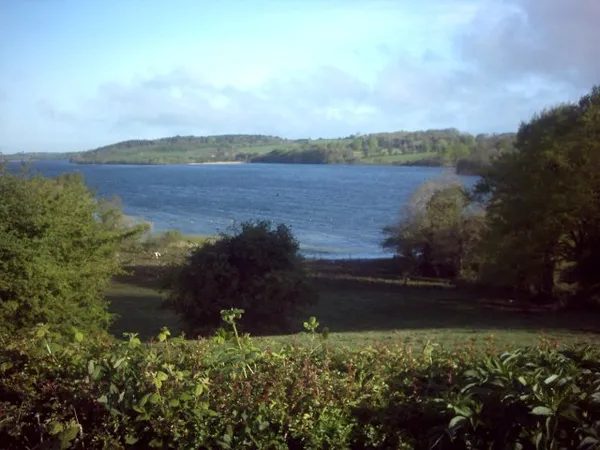
Lough Lene (Irish: Loch Léinn) is a hardwater marl lake, low in nutrients and clear enough to see the bottom well out from the shore, which is rare in Europe and rare enough in the Irish midlands to be worth the drive. It lies near Collinstown in the rolling limestone country of north County Westmeath. It covers around 417 hectares and drops to about 20 metres, and it is designated a Special Area of Conservation for the very qualities that make it so clear.
The Cut is its designated bathing area. Use signed public access and leave reed beds, fields and islands undisturbed.
Is it safe to swim in Lough Lene?
Check the current bathing notices and local signs at the Cut before you enter the water. Westmeath County Council lifted a temporary do-not-swim notice in June 2026. Follow current notices and flags, and choose a lifeguarded area while patrols are on duty. The marl geology that makes the water so clear also keeps it cold, and the lake reaches about 20 metres deep, so stay within the area signed for swimmers.
History and archaeology
Lough Lene has been used for thousands of years, and it keeps handing things back. In 1968 divers recovered two remarkably preserved logboats from the mud near Castle Island: Roman-period craft about eight metres long, cut from oak and yew and joined with sophisticated woodwork. They are held by the National Museum.
Castle Island gave up something smaller and stranger, too: a 7th-century silver bell, found in 1881. A half-size reproduction of it serves as the Ceann Comhairle’s bell, rung to call order in Dáil Éireann. Three islands break the lake’s surface, each with its own thread of history: Nun’s Island, tied to a medieval convent; Turgesius Island, named for the 9th-century Viking leader; and Castle Island itself. Leave the islands undisturbed.
The Viking connection carries onto the land. Randoon (Irish: Randún), a 125-metre hill in Ranaghan townland just south-west of the lake, was a stronghold of Turgesius, who used Lough Lene as a base. The earthworks are protected under national heritage law and the hill sits among a scatter of ringforts across the surrounding townlands. Treat it as something to know about rather than a place to go: do not enter fields or private land to reach it.
Wildlife
The wet woodland and marshy margins hold teal, mallard and reed warblers, with waders such as curlew and lapwing in winter. Watch from public access points and keep clear of the reed beds.
Nearby
- Hill of Uisneach – The ancient ceremonial centre of Ireland. Check its own page for access and opening.
- Belvedere House – An 18th-century estate above Lough Ennell, known for its formal gardens and the spiteful folly called the Jealous Wall.
- Fore Abbey – Ruined monastic remains and the celebrated Seven Wonders, a short distance away.