
Overview
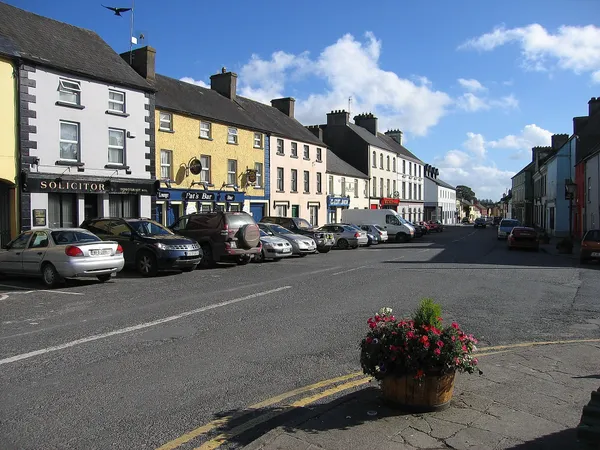
Mountrath (Irish: Maighean Rátha, ‘the homestead of the ringfort’) sits on the R445 in County Laois, between Portlaoise and the Slieve Bloom Mountains. It was a coaching stop on the old Dublin–Limerick road, and for decades traffic crawled nose-to-tail through the square until the M7 bypass opened in 2010 and gave the streets back to the town of just over 2,000 people. The White Horse River runs through the centre. Most people who stop here are on their way to the Slieve Blooms, but one thing is worth pulling over for even if you never leave the road.
St Fintan’s Well – the wish tree
Local tradition links a holy well with a tree on the Portlaoise side of town. The story goes that the original well was filled in to stop the superstition around it, and the spring water reappeared in the fork of a sycamore. People took to pressing coins edge-first into the bark as offerings, which is how it got the name wish tree. The weight of metal killed the first trunk, but the tree threw up new shoots and carried on.
View it without adding coins or taking water, and keep to safe public areas off the road. If you have twenty minutes in Mountrath, it is a strange and genuinely old corner of local folklore.
History and heritage
The area was on the map long before the town was. In 1111 the Synod of Ráth Breasail, held nearby, redrew the Irish church into territorial dioceses for the first time. The town itself took shape in the 1600s under Charles Coote, who secured a royal grant for two weekly markets and two annual fairs in 1628 and built up a linen and fustian trade that lasted until the surrounding woods were stripped for charcoal. The Coote line held on through the Earldom of Mountrath, which died out in 1802.
In 1809 the Brigidine Sisters founded a convent here and, with a later Patrician monastery, taught local children for the best part of two centuries. The Sisters handed the convent buildings to the community in 2017, and after renovation they reopened as an Enterprise Hub and Community Centre, with co-working space and community classes where the classrooms used to be.
The town and the golf club
Mountrath keeps a 19th-century scale, with a former courthouse and St Fintan’s Church, which holds a set of early medieval cross-slabs moved in from the original monastic site. The graveyard is worth a slow read.
Mountrath Golf Club is south of town by the River Nore. It is an 18-hole parkland course founded in 1929 and extended from nine holes to eighteen in 1994, and the old mill that once generated the town’s electricity still stands on the course. Check the club’s listing for green fees and tee times before you go.
The river walk and the amenity park
Mountrath has a riverside walk along the White Horse River. If you’re travelling with children, head instead for the town playground: Laois County Council’s playground listing gives its location and is the place to check current details.
Into the Slieve Blooms
The main reason to base yourself in Mountrath is the Slieve Bloom Mountains nearby, rising to around 500 m. For a forest walk, the Monicknew trails give you shorter routes in the Slieve Blooms, including gentle trails that suit families. For a longer outing, check the Slieve Bloom Way map and current conditions before you set out. Bring waterproofs and proper footwear: this is not weather to chance in trainers.
Food and drink
The town has shops, pubs and takeaways for essentials after a hill day, though opening times vary, so check locally.
Nearby
- Aghaboe Abbey – a 6th-century monastic site 8 km north, with a well-preserved high cross and a quiet graveyard.
- Castle Durrow – an early 18th-century estate with formal gardens, 12 km away.
- Clonaslee – a small village 10 km off, and the main gateway to the Slieve Bloom Way.
Getting there
- By road – M7 to Portlaoise, then the R445 west; the same road brings you in from the Limerick side. In town, follow the signs for parking.
- By bus – services here are limited, so check Local Link for current timetables before you plan around one.
- By rail – the nearest station is Portlaoise, on the Dublin–Cork line, with onward buses.
- By air – Dublin Airport is the nearest major airport.