
Overview
Slieve Patrick is a hill between Saul and Raholp, just outside Downpatrick. A granite statue of St Patrick stands at the top, unveiled in June 1938, and from the higher ground you can look over the countryside around Saul and Strangford Lough. Allow for an uphill walk on grassy ground and wear shoes with grip.
Be honest with your time here: on its own the hill is a short stop, not a day out. What makes it worth the detour is the cluster of Patrician sites around it. Saul Church, the Saint Patrick Centre and Down Cathedral are all nearby, so treat the summit as one stage of a bigger Downpatrick visit rather than a destination in itself.
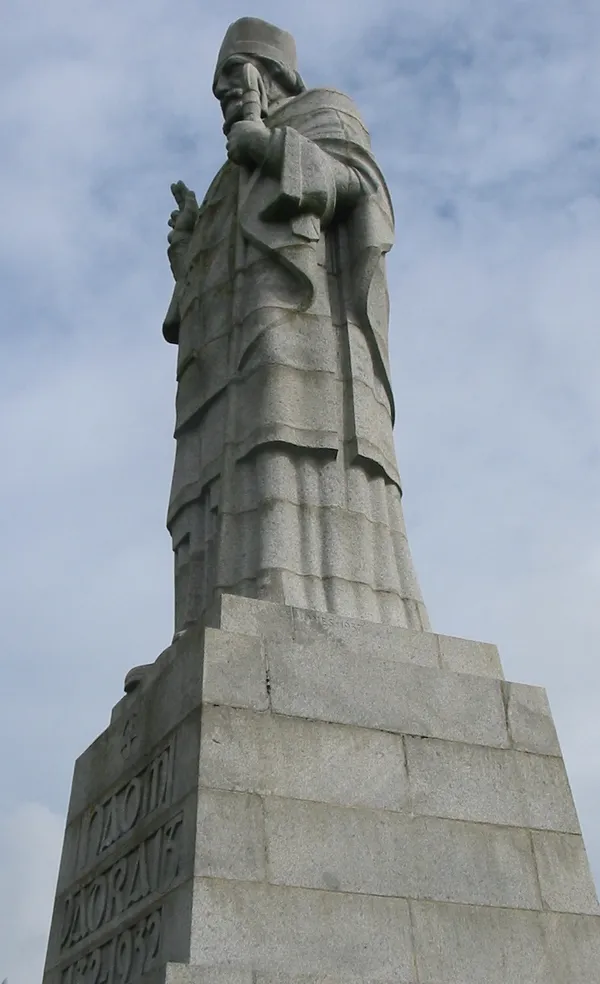

The monument and its history
Before the statue, the hill was called Slieve Willan, as the parish history records. In the early 20th century two local parishioners, Tommy and Dinny Hampton, gave the land to the parish of Saul for a national memorial to Ireland’s patron saint. The monument was unveiled on Sunday 12 June 1938 by Cardinal MacRory; Most Rev P Lyons, Bishop of Kilmore, preached, and Bishop Mageean blessed the statue and renamed the hill Slieve Patrick.
The statue is visible for miles around, which is the point: it was built as a landmark of pilgrimage, not a discreet memorial. For more on the statue’s design and the local tradition, see the Saint Patrick Centre in Downpatrick.
The walk and the views
The route climbs a path through grass and heather. It is uphill rather than a scramble, but it is unpaved, so it suits families and casual walkers who are happy with uneven ground. Follow local signs, and ask the parish about access if you are visiting for a service or pilgrimage.
From the higher ground you can look over the countryside around Saul and Strangford Lough. Traditional Patrician sites in the surrounding landscape include Slemish, where the young Patrick is said to have herded sheep during his years of servitude, Saul, traditionally the site of the first church he founded, and the holy wells at Struell.
The top is exposed, and the wind gets up quickly in spring and autumn. A windproof layer is worth carrying year-round.
Pilgrimage and spiritual heritage
Slieve Patrick is a waypoint on the Saint Patrick’s Way, a “Camino”-style pilgrim walk organised by the Saint Patrick Centre. The route runs from Inch Abbey along the River Quoile to Saul Hill and Saul Church, over Slieve Patrick, past Struell Wells and finishes at Down Cathedral, the traditional burial place of the saint.
The Saint Patrick Centre may offer guided walks along the route. Check its current options, durations and prices before you plan around one.
Seasonal events
The hill is mainly a daytime spot, but pilgrimage days change its character. The parish holds services and pilgrimages linked to the hill and to Saul, including a pilgrimage at the start of summer and Mass at Easter. Dates and arrangements change from year to year, so check with the parish before you plan around one, and ask about access and parking if you are travelling for a service.
If you visit on a pilgrimage day, dress for the exposed top and keep noise down out of respect for the occasion.
Practical information
- Access and parking: Follow local signs for the approach to the hill, and ask the parish about access or parking if you are visiting for a service or pilgrimage. Check the parish page for current arrangements.
- Public transport: Translink buses serve Downpatrick town centre, but check before you travel as no regular bus is known to run to the hill. A short taxi ride from Downpatrick is the simplest option without a car.
- Admission: Free.
- Facilities: Do not count on toilets, shops or refreshments on the hill. Use facilities in Downpatrick or at Saul Church first.
- Accessibility: The unpaved, grassy path is uneven and uphill. It is not suitable for wheelchairs or mobility scooters, but manageable for most people with reasonable mobility.
- Safety: The hill is exposed and can be slippery and windy in bad weather. Check the forecast and keep clear of the monument’s base in storms.
Exploring further in Downpatrick
Slieve Patrick works best as part of a wider visit. Saul Church, traditionally the first church Patrick founded in Ireland, is a short distance away, and the Saint Patrick Centre in Downpatrick has exhibitions on the saint’s life; check its website for current opening. Down Cathedral marks his traditional burial place. With more time, the Georgian estate and coastal trails at Castle Ward on Strangford Lough make a good contrast. Check local listings for temporary road closures around the big feast days.