
Overview
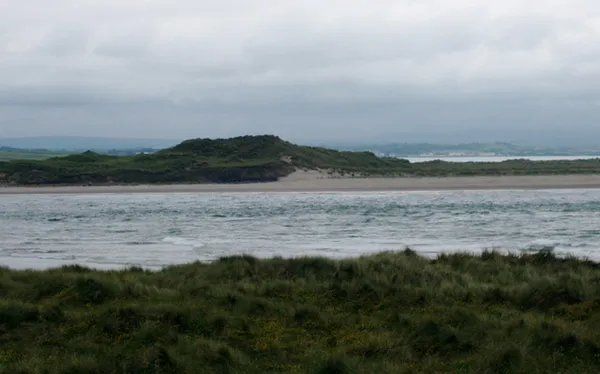
Bartra Island (Irish: An Bheartrach; also spelled Bartragh Island) is a low sandy island across the mouth of Killala Bay, near Killala in County Mayo. It is a long sand-and-dune barrier, separated from the mainland by tidal channels and flats. It covers about 0.75 square miles (1.9 km²), and is a place for birds more than people. It is a place to look at rather than to walk out to: view it from the mainland shore, and treat the flats, channels and the island itself as off limits to casual visitors.
NPWS’s coastal report records the island’s protected coastal habitats and the remains of Bartragh House.
View from the mainland
Stay on the mainland and use binoculars from a public shore access near Killala. Follow the Irish Coast Guard’s water-safety advice and keep clear of channels and soft tidal mud. Tides and conditions in the bay change quickly, and the flats are not a safe or sanctioned way to reach the island. No public landing arrangement is listed, so do not plan to land.
The island
Bartra is a sandy barrier island: a long ridge of dunes stabilised by marram grass, with a beach on its ocean-facing side and wide intertidal sand flats behind, threaded with tidal channels that drain into Killala Bay and the Moy estuary. It lies within the Killala Bay/Moy Estuary Special Area of Conservation, and the birdlife is the main draw from the shore. On the flats you can expect redshank, curlew, dunlin, ringed plover and oystercatcher; winter brings brent geese, and spring and autumn bring bar-tailed godwit. Spring (March to May) and autumn (September to November) are the peak migration windows and the best times to bring binoculars.
Bartragh House and its owners
The island’s story sharpens in the 19th century, when the Kirkwood family held the land. Captain Charles Kirkwood, a veteran of Trafalgar, is said to have built Bartragh House in the 1830s: a U-shaped Georgian-Gothic house of seventeen rooms with a half-dormer attic. Its early years had their moments – in 1837 three men are reported to have broken 156 panes of glass in a single night, reportedly because Kirkwood had been selling mutton below the going rate.
After the Kirkwoods the house is said to have passed through a run of colourful owners, among them Captain Verner after the Second World War and Captain Charles Wynne-Roberts, whose wife was the actress Joyce Redman. Later plans for the island, including a natural-health centre and a championship golf course associated with the golfer Nick Faldo, are reported to have come to nothing amid conservation objections and the awkwardness of tidal access, and the house was left to decay. What survives now is a roofless ruin of U-shaped walls and an overgrown courtyard. It lies within a protected site, so it is something to know about rather than somewhere to go.
Getting there and nearby
From the village of Killala, look for a public shore access with a view across the bay. If you have time either side, Killala itself has a historic harbour, and inland the trails of Ballycroy (Wild Nephin) National Park are within reach for a bigger day. Ballina is the nearest large town, with Westport further along the coast.
Whatever else you plan, check the weather and tide before you head out to the shore, and stay on the mainland side of the water.