Historic Sites in County Down

Cathedral Hill in Downpatrick is where much of this list begins. The granite slab marking St Patrick’s reputed grave was laid only in 1900, but the two 12th-century crosses beside it and the 11th-century font inside Down Cathedral are older, and entry is free. Inch Abbey stands roofless by the River Quoile a short way north, with a heritage railway running out to it. Ballynoe Stone Circle and Ballyalton Court Cairn lie a few miles south and east, so one day based in Downpatrick covers five of the twenty-three places here.

The rest are spread wide. Legananny Dolmen sits on the slopes of Slieve Croob above Dromara, three slender uprights under a granite capstone, with the Mournes filling the view. Kilfeaghan Dolmen near Rostrevor asks more of you: parking on a narrow farm lane, then a muddy field on private ground. Further north, Bangor Abbey keeps a 15th-century tower and a 1693 steeple on the site Columbanus left from, and Greyabbey pairs a 12th-century Cistercian ruin and a recreated physic garden with the antique dealers along the village street.

Most of this is open ground and free to walk into. The abbeys and the cathedral hold up in winter; the dolmens and the sunken track down to Ballynoe are better after dry weather. Newry Town Hall, on its bridge over the Clanrye, and the Gillespie column in Comber Square are ten-minute stops rather than outings.

Where to start

  1. Down Cathedral – St Patrick's grave Downpatrick

    The reputed grave of St Patrick lies under a granite slab on Cathedral Hill, with 12th-century crosses and an 11th-century font alongside, free to visit.

  2. Legananny Dolmen – best view in Ulster Legananny

    Three slender uprights carrying a massive granite capstone, over 5,000 years old, with the Mourne Mountains behind and free access on the slopes of Slieve Croob.

  3. Bangor Abbey – where Columbanus set out from Bangor

    Founded in 558 by Saint Comgall and known across medieval Europe, it survives as a working parish church with a 15th-century tower and 1693 steeple.

21 of 23 shown — tap a pin for the place.

Dromore Cathedral - geograph.org.uk - 67460
Dromore Cathedral - geograph.org.uk - 67460 Brian Shaw / Wikimedia Commons / CC BY-SA 2.0

Dromore Cathedral – worship since 510 AD

Dromore, down

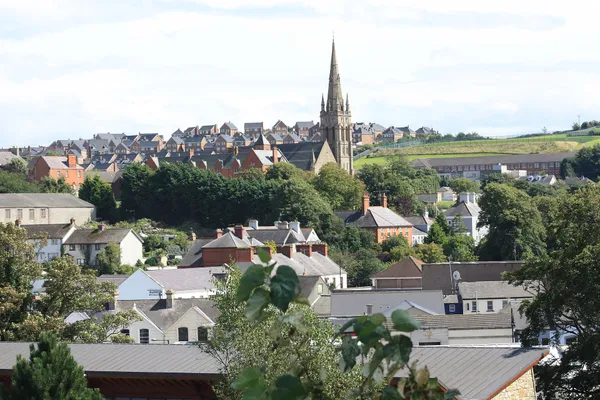
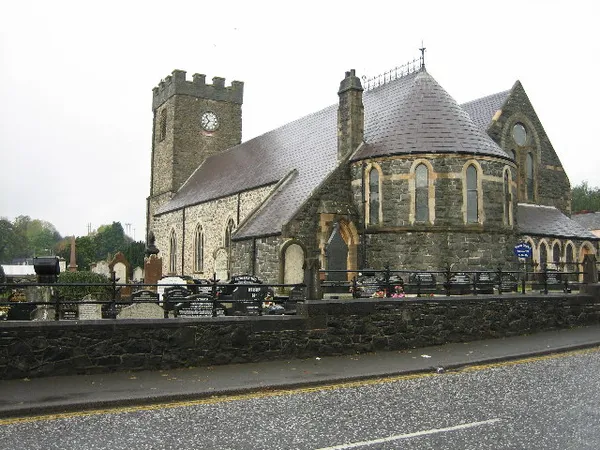
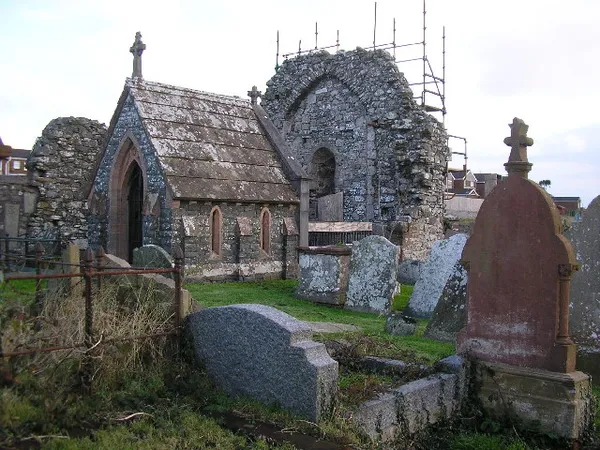
Christians have worshipped on this spot in County Down since St Colman set up a wattle church around 510 AD. The present cathedral was rebuilt after the 1641 destruction under Bishop Jeremy Taylor, whose grave slab is set into the floor, and a restored high cross with 9th or 10th-century stonework stands by the entrance.

🌳 Outdoor 🐕 Dogs Welcome
Bailey, Dromore - geograph.org.uk - 1405549
Bailey, Dromore - geograph.org.uk - 1405549 Dean Molyneaux / Wikimedia Commons / CC BY-SA 2.0

Dromore Motte and Bailey

Mount Street, down

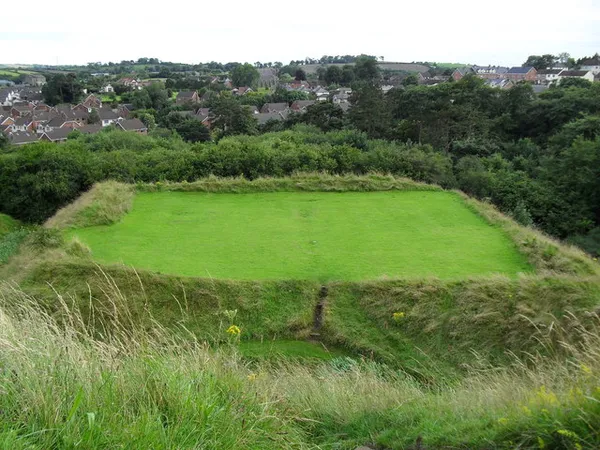
Built by Sir John de Courcy's men in the early 1200s, this 12-metre mound rises over a bend in the River Lagan and counts as the best-preserved Anglo-Norman motte and bailey in Ulster. King John lodged here for three days in 1210, Edward Bruce destroyed it in 1315, and a 1951 dig found the timber palisade that once ringed the summit. Free, open access, five minutes to the top.

🌳 Outdoor
Giants Ring
Giants Ring Lordjaysus ( talk ) / Wikimedia Commons / CC BY-SA 3.0

Giant's Ring – Neolithic henge, Belfast

Ballynahatty, down

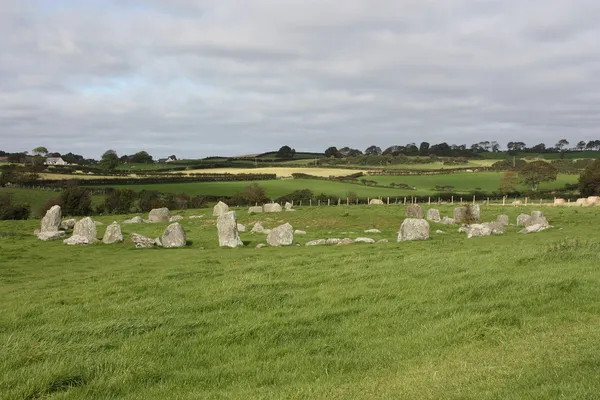
The Giant's Ring is a Neolithic henge on the southern edge of Belfast: a circular earth bank 180m across and 3.5m high, enclosing a five-stone passage tomb at its centre. Built around 2700 BC, it predates the pyramids, and it's free and open at all hours – one of the largest and least-visited prehistoric monuments in the north.

🌳 Outdoor 🅿️ Free Parking 🐕 Dogs Welcome
Grey Point Fort, Helen's Bay (2) - geograph.org.uk - 441338
Grey Point Fort, Helen's Bay (2) - geograph.org.uk - 441338 Albert Bridge / Wikimedia Commons / CC BY-SA 2.0

Grey Point Fort

Helen's Bay, down

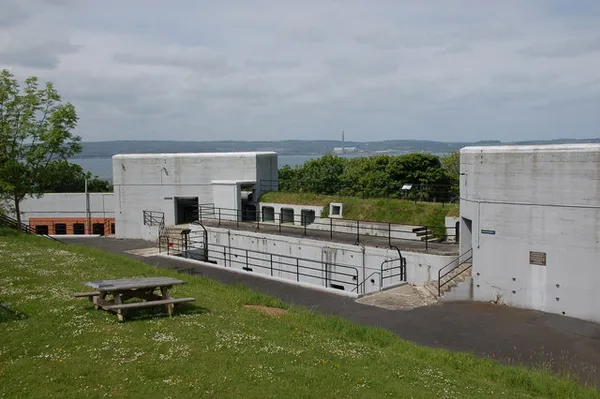
Built in 1907 to guard Belfast Lough, Grey Point Fort stands on a rocky promontory in Helen’s Bay with its twin 6-inch guns still in place. Volunteers now run a free museum showcasing wartime memorabilia, while the site’s concrete shelters and observation towers offer a tangible glimpse into Ireland’s coastal defence history.

🌳 Outdoor 🅿️ Free Parking
Kilfeaghan Dolmen, Carlingford Lough, Co Down
Kilfeaghan Dolmen, Carlingford Lough, Co Down Tourism Ireland

Kilfeaghan Dolmen – a giant granite capstone above Carlingford Lough

Rostrevor, down

Kilfeaghan Dolmen is a portal tomb of around 4,500 years old on the eastern slopes of Knockshee, near Rostrevor in Co Down. Its capstone is a single block of granite weighing roughly 35 tonnes, thought to be a glacial erratic propped up on portal stones rather than lifted into place. Reaching it means parking on a narrow farm lane and walking across a field on private ground, muddy underfoot and with no facilities.

🌳 Outdoor
The Cathedral Church of SS Patrick and Colman in Hill Street - geograph.org.uk - 1478104
The Cathedral Church of SS Patrick and Colman in Hill Street - geograph.org.uk - 1478104 Eric Jones / Wikimedia Commons / CC BY-SA 2.0

Newry Cathedral – granite and gold mosaic

38 Hill Street, down

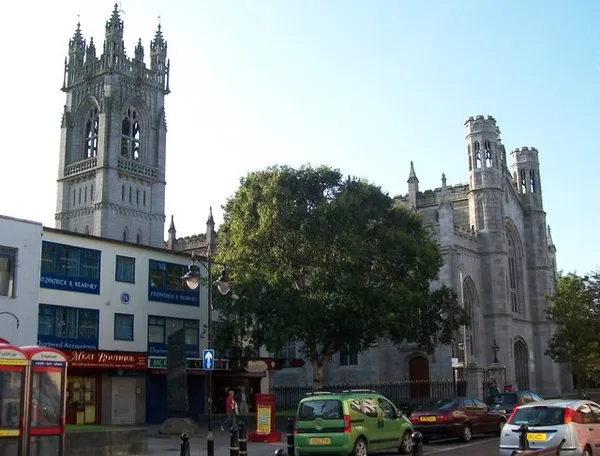
Rising over Newry's Hill Street, this granite cathedral of 1829 was the first Catholic cathedral finished in Ireland after Emancipation. Inside are the country's largest spread of gold-leaf mosaic, Hardman stained glass, and a reliquary of more than 300 relics – put out for veneration just once a year.

🌳 Outdoor

Questions people ask

Which historic sites can I see in one day from Downpatrick?
Down Cathedral, Inch Abbey, Ballynoe Stone Circle and Ballyalton Court Cairn all sit within a few miles of the town. The cathedral and Inch Abbey are free, and Ireland's only full-size heritage railway runs out from Downpatrick to Inch Abbey.
Where is St Patrick supposed to be buried?
On Cathedral Hill in Downpatrick, beside Down Cathedral. The Mourne granite slab over the grave was laid in 1900, not in his lifetime. The town below also has a free county museum in a former gaol and the Saint Patrick Centre.
Which of the dolmens is easiest to reach?
Legananny, on the slopes of Slieve Croob above Dromara, has free access and the better view. Kilfeaghan, near Rostrevor, means parking on a narrow farm lane and crossing a field on private ground, muddy underfoot and with no facilities.
What suits a wet day or a winter visit?
The roofed buildings hold up best: Down Cathedral in Downpatrick and Bangor Abbey, both still in use. The abbey ruins at Greyabbey and Inch are open ground but easily walked. The field sites, Kilfeaghan and Ballynoe, are the ones that turn to mud.
What is there in the north of the county?
Bangor Abbey stands in the town itself, and Clandeboye Estate just outside it has Helen's Tower and the largest broadleaf woodland in the North. Greyabbey lies down the Ards shore, and the Rollo Gillespie column stands in the middle of Comber Square.

← All things to do in County Down

Book tours & tickets

Powered by GetYourGuide

We may earn a commission if you book through this link, at no extra cost to you.

Book tours, skip-the-line tickets and day trips with GetYourGuide. Free cancellation on most experiences.

See tours & tickets in County Down →
Advertisement