Historic Sites in County Galway

Three of Ireland’s great drystone forts sit offshore here. Dún Aonghasa stands 100 metres above the Atlantic on the western edge of Inis Mór, its ramparts ending at the cliff, with an exhibition at the visitor centre. Dún Dúchathair, the Black Fort, is on the same island and usually far quieter, and Dún Chonchúir crowns the high point of Inis Meáin, free and unguided at any hour. All three need a ferry, so they are a day out rather than a stop on a drive.

On the mainland the sites fall roughly into a western group and an eastern one. Connemara’s cluster on Derrigimlagh bog south of Clifden, where a free 5 km loop takes in both the concrete mast bases of Marconi’s wireless station and the cairn marking where Alcock and Brown came down in 1919. Cromwell’s Barracks, a star fort of about 1656, lies off Inishbofin and is reached on foot only for the couple of hours the causeway is exposed around low tide.

East Galway runs to churches and institutions near the Shannon: the Romanesque doorway at Clonfert, carved around 1200, where the key comes from the caretaker’s house; the Franciscan foundation at Meelick, still a working parish church; and the Portumna workhouse, whose seven main buildings survive intact and are seen on guided tours. The Spanish Arch is the one you can simply walk to.

Where to start

  1. Dún Aonghasa Inis Mór

    Perched 100 metres above the Atlantic on Inis Mór, its drystone ramparts and forest of limestone spikes make it the county's most dramatic prehistoric site.

  2. Spanish Arch Galway

    Built in 1584 as an extension of the medieval city walls, it anchors the Long Walk and stands beside the free Galway City Museum.

  3. Alcock & Brown Crash Site Derrigimlagh Bog

    A stone cairn on Derrigimlagh Bog marks where the first non-stop transatlantic flight ended in 1919, with a signposted loop past Marconi's wireless ruins.

43 of 45 shown — tap a pin for the place.

ArdfryHouse2016
ArdfryHouse2016 JuneGloom07 / Wikimedia Commons / CC BY 4.0

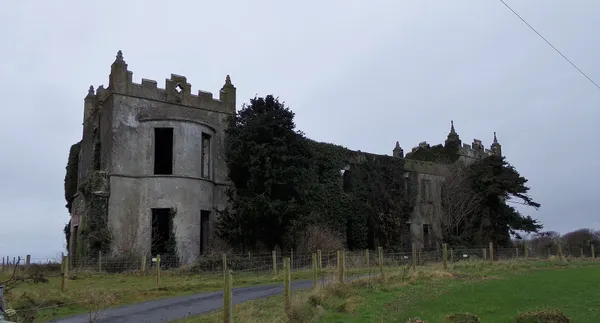
Ardfry House – burnt-out Gothic ruin

Ardfry, galway

Ardfry House is the roofless shell of a Georgian-Gothic manor on a peninsula near Oranmore, built around 1770 for the Blake family and given its castle-like pinnacles in an 1826 remodel. Stripped of its roof lead to cover gambling debts, then re-roofed and deliberately burnt for the 1973 film The Mackintosh Man, it is now a fenced-off ruin at high risk of collapse. You view it from the public road or the seafront walk.

🌳 Outdoor
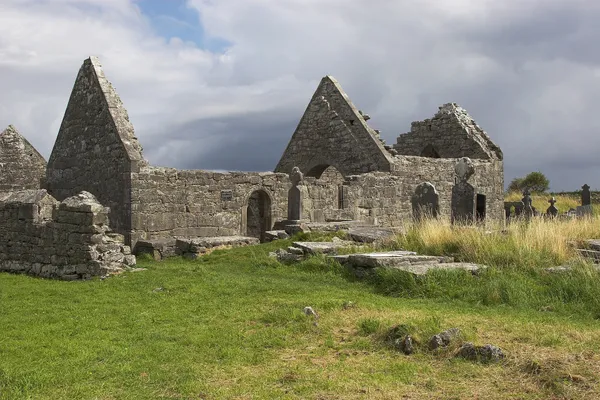
Cashleen Church of the Seven Daughters North Wall 2018 09 04
Cashleen Church of the Seven Daughters North Wall 2018 09 04 Andreas F. Borchert / Wikimedia Commons / CC BY-SA 4.0

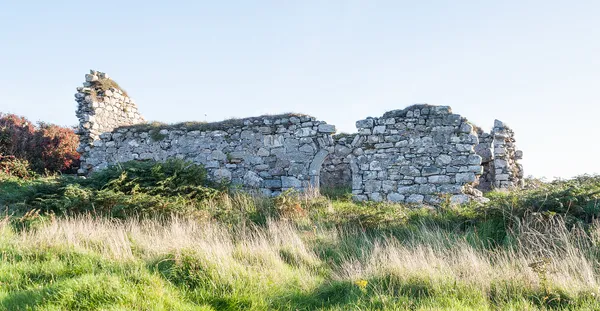
Church of the Seven Daughters

Renvyle, galway

At the western tip of the Renvyle peninsula, the roofless Church of the Seven Daughters keeps a pointed-arch north doorway, a single-light east window and a broken stone altar. Legend has a king, or an Omey Island chief, building it in thanks for the cure of seven daughters at the holy well up the track — the sisters then preached their way along the Connemara coast.

🌳 Outdoor 🅿️ Free Parking
Clochán na Carraige
Clochán na Carraige Doonaran / Wikimedia Commons / CC BY-SA 4.0

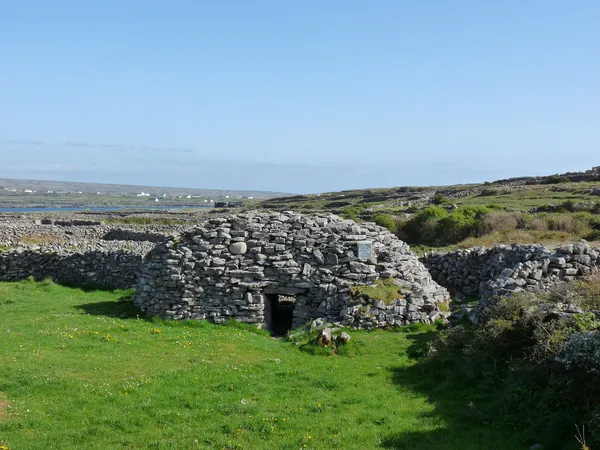
Clochán na Carraige

Inishmore, galway

Clochan na Carraige is the only beehive hut left intact on Inishmore, a mortar-less dry-stone clochán with a corbelled roof and two opposing doorways, in a field signposted off the Kilmurvy–Sruthán road. The corbelling technique was used for thousands of years, so it can't be firmly dated, though it's usually called early Christian and tied to the island's pilgrim past. It's free, unguided and a quiet ten-minute stop on the way to Dún Aonghasa.

🌳 Outdoor
View, Cromwell's Barracks, Inishbofin Island, Co Galway
View, Cromwell's Barracks, Inishbofin Island, Co Galway Courtesy Fionnán Nestor

Cromwell's Barracks – a tide-locked fort

Inishbofin Island, galway

Cromwell's Barracks is a five-pointed star fort built around 1656 on Port Island, a tidal islet at the mouth of Inishbofin's harbour. The Cromwellians held captured Catholic priests here before shipping them to the West Indies, and Jacobite troops later held it until after the Battle of Aughrim in 1691. It's free, but you can only reach it on foot across a causeway that's exposed for about two hours around low tide.

🌳 Outdoor
Dun Chonchúir, Inis Meáin, Aran Islands, Co Galway
Dun Chonchúir, Inis Meáin, Aran Islands, Co Galway Daniela Ugga Campbell

Dún Chonchúir – Inis Meáin's great fort

Inis Meáin, galway

Dún Chonchúir is an oval drystone fort on the highest point of Inis Meáin, built sometime between the 1st and 7th centuries AD. Its inner wall still rises up to seven metres and once ran more than eight metres thick at the base – roughly 14,000 tonnes of limestone stacked without mortar. It is free, unguided and open all hours, with a full 360-degree sweep across the three Aran Islands.

🌳 Outdoor 🐕 Dogs Welcome
Aerial View, Dún Dúchathair, Black Fort, Inis Mor, Aran Island, Co Galway
Aerial View, Dún Dúchathair, Black Fort, Inis Mor, Aran Island, Co Galway Courtesy Fáilte Ireland

Dún Dúchathair – The Black Fort, Inis Mór

Inis Mór, galway

Perched on a windswept promontory on Inis Mór, Dún Dúchathair is the quieter, equally dramatic alternative to Dún Aonghasa. Its stepped dry-stone walls and surviving beehive huts speak to centuries of island life, all set against the open Atlantic – and unlike its famous neighbour, you'll likely have it to yourself.

🌳 Outdoor 🐕 Dogs Welcome
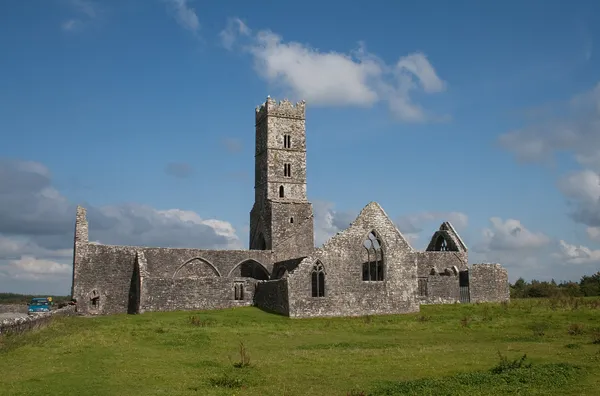
Kilconnell Friary South Range 3 2009 09 16
Kilconnell Friary South Range 3 2009 09 16 Andreas F. Borchert / Wikimedia Commons / CC BY-SA 4.0

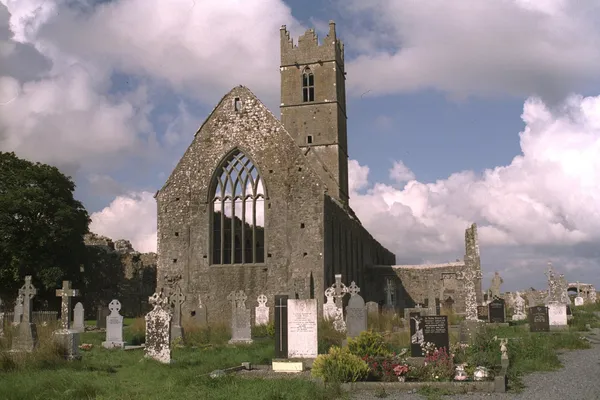
Kilconnell Friary – O'Kelly Franciscan ruin

Kilconnell, galway

Kilconnell Friary is a well-preserved Franciscan ruin in east Galway, founded by the O'Kelly lords of Uí Maine and reconstructed around 1414. Its highlights are the canopied O'Kelly tombs carved with angels and heraldry, a three-storey central tower and surviving cloister arcading – all free to visit, open daily.

🌳 Outdoor 🅿️ Free Parking
Kiltartan-Gladstone
Kiltartan-Gladstone Lady Gregory / Wikimedia Commons / Public domain

Kiltartan – Lady Gregory's literary corner

Kiltartan, galway

Kiltartan is the south Galway parish where the Irish Literary Revival took root – Lady Gregory and W.B. Yeats collected folklore in its fields and lanes. A restored 1892 schoolhouse now holds the Kiltartan Gregory Museum, and the ruins of the de Burgo tower house at Castletown stand a short way off. The crossroads itself is tied to the blind poet Raftery and his 'Beauty of Ballylee'.

🌳 Outdoor 🅿️ Free Parking
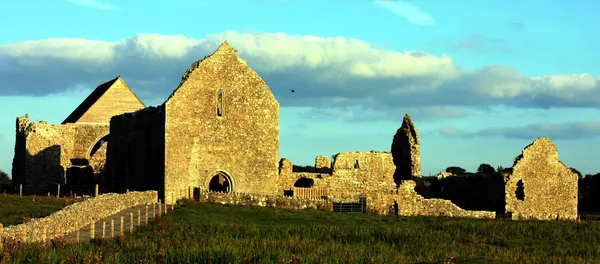
Knockmoy Abbey
Knockmoy Abbey DanielecDalton / Wikimedia Commons / CC BY-SA 4.0

Knockmoy Abbey – royal Cistercian ruin

Abbeyknockmoy, galway

Knockmoy Abbey was founded in 1189/90 by Cathal Crobhdearg Ua Conchobair, King of Connacht, after a vow before battle, and he was buried here in 1224. The north chancel wall holds 15th-century tempera wall-paintings, one of only four such survivals in Ireland, including the 'Three Living and Three Dead'. Reaching it means a stile and steps over a fence.

🌳 Outdoor 🅿️ Free Parking
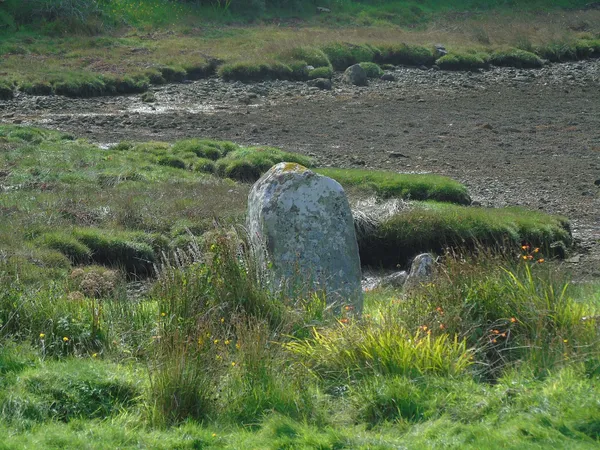
County Galway - Letterdeen Standing Stone - 20180909142236
County Galway - Letterdeen Standing Stone - 20180909142236 Newbert12 / Wikimedia Commons / CC BY-SA 4.0

Letterdeen Standing Stone – Sky Road menhir

Streamstown Bay, galway

The Letterdeen Standing Stone is a single 1.6-metre granite pillar on a tidal salt marsh at the eastern edge of Streamstown Bay, about 3 km north-west of Clifden. It's a modest monument, and the reason to stop is the setting - a low flood plain opening onto the bay, with several other megaliths scattered nearby.

🌳 Outdoor 🅿️ Free Parking
Meelick Abbey, 1833 (IA jstor-30003908) (page 1 crop)
Meelick Abbey, 1833 (IA jstor-30003908) (page 1 crop) B. / Wikimedia Commons / Public domain

Meelick Church

Meelick, galway

Founded as a Franciscan friary in 1414 and still an active parish church, Meelick has survived suppression, hiding and near-ruin on a quiet rise above the River Shannon. Its 17th-century memorial tablets, old graveyard and place on the Hymany Way make it a worthwhile stop, though it remains a working church rather than a visitor attraction.

🌳 Outdoor 🅿️ Free Parking

Questions people ask

Which of these need a ferry?
Dún Aonghasa and Dún Dúchathair are on Inis Mór, Dún Chonchúir is on Inis Meáin, and Cromwell's Barracks is off Inishbofin. Everything else on the list is reachable by road, though the Connemara and east Galway sites are a long way apart.
What can I see without leaving Galway city?
The Spanish Arch, on the Long Walk where the Corrib meets the sea, with the free Galway City Museum beside it. The rest of the list involves a drive or a boat, so plan the city and the county as separate outings.
How do I get inside Clonfert Cathedral?
The church is usually locked. You collect the key from the caretaker's house to the right of the cathedral. The 12th century Romanesque west doorway is outside and can be seen at any time; St Brendan's grave is within.
When can I cross to Cromwell's Barracks on Inishbofin?
The causeway to Port Island is exposed for roughly two hours around low tide, so check the tide times before you set out from the harbour. Access is free, but there is no way back across once the water returns.
Which sites cost nothing to visit?
The Derrigimlagh loop, including the Marconi station and the Alcock and Brown cairn, is free and self-guided, as are Dún Chonchúir, Cromwell's Barracks, the Spanish Arch and the Quiet Man Bridge at Leam. Portumna Workhouse runs paid guided tours.

← All things to do in County Galway

Book tours & tickets

Powered by GetYourGuide

We may earn a commission if you book through this link, at no extra cost to you.

Book tours, skip-the-line tickets and day trips with GetYourGuide. Free cancellation on most experiences.

See tours & tickets in County Galway →
Advertisement