
Castletown House
Celbridge, kildare
🌳 Outdoor
Castletown House at Celbridge heads the list: a Palladian mansion finished in the late 1720s for Speaker William Conolly, in free-to-walk parkland on the Liffey, with the interiors, including Ireland’s only surviving 18th-century Print Room, seen by guided tour only. South-west of there, Kildare town still holds the shape of the monastery St Brigid founded in the 5th century, its Norman cathedral standing beside a 33-metre round tower, the tallest in Ireland you are allowed to climb. Castledermot, at the southern tip of the county, is a compact free circuit: two 10th-century high crosses and Ireland’s only Viking hogback stone in the churchyard of St James’, with the Franciscan friary and the last scrap of town wall a short walk on.
The rest is scattered rather than grouped. Naas has two, the red-brick shell of Jigginstown, begun as a palace for Charles I and never finished, and the twin Egyptian Revival pyramids at Maudlings Cemetery. Clane’s roofless Franciscan friary of 1272 sits off Main Street, with Wolfe Tone’s grave at Bodenstown nearby. Rathangan’s ringfort rises over the town where the Slate River meets the Grand Canal, and the towpath there is flat walking.
Most of these are open ground, free and unstaffed, so weather matters more than season. The exceptions are Castletown and Harristown House near Punchestown, which opens only a few weeks a year by guided tour. Great Connell Priory is unsigned, and the lay-by at Taghadoe sits on a blind bend; anything outside the towns needs a car.
The Palladian mansion completed in the late 1720s for Speaker William Conolly, with free parkland on the Liffey and the only surviving 18th-century Print Room in Ireland.
Grew up around St Brigid's 5th-century monastery, and its 33-metre round tower is the tallest in Ireland that visitors are allowed to climb.
A compact, free village circuit taking in two 10th-century high crosses, Ireland's only Viking hogback stone, a Franciscan friary and a fragment of medieval town wall.
The roofless shell of a Franciscan friary founded in 1272 sits off Main Street, free to wander, with King Mesgegra's Iron Age mound above the Liffey.
16 of 16 shown — tap a pin for the place.
Celbridge, kildare

Kildare Town, kildare
Kildare Town grew up around the monastery St Brigid founded in the 5th century. Its 33-metre round tower is the tallest in Ireland you can actually climb, the cathedral sits beside it, and the Irish National Stud and Kildare Village outlet are a short hop away.

Castledermot, kildare
Castledermot packs centuries of heritage into a compact, free-to-walk village circuit. The churchyard of St James' holds Ireland's only Viking hogback stone and a pair of 10th-century high crosses; a short walk away are the ruins of the Franciscan friary and the last upstanding fragment of the medieval town wall.

Clane, kildare
Clane's Franciscan friary, founded in 1272, stands as a roofless shell off Main Street, free to wander. Nearby, King Mesgegra's Mound is an Iron Age earthwork above the River Liffey, and riverside paths run from the town centre. The town sits 29 km west of Dublin in County Kildare.
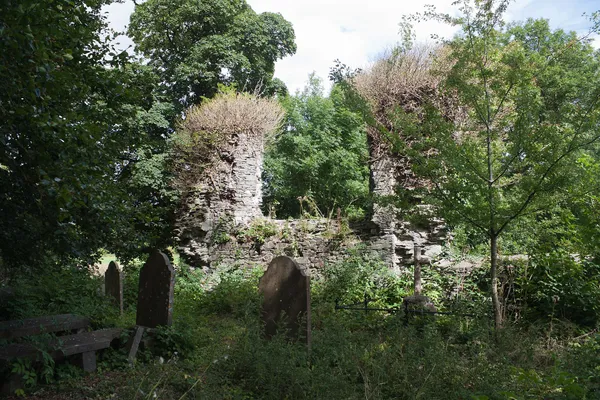
Great Connell, kildare
Founded in 1202 by Meiler fitz Henry and suppressed around 1540, this Augustinian house once held some 1,260 acres, six churches and five castles. What survives is the east window's Gothic tracery and a scatter of carved capitals, much of the rest reused in the 1800s for Newbridge barracks.
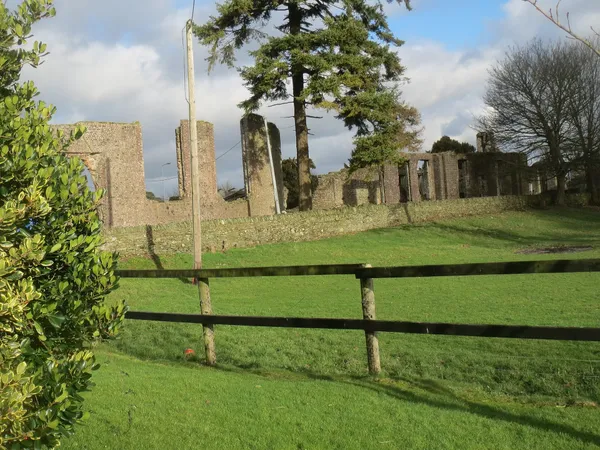
Naas, kildare
Jigginstown House is the protected brick shell of a mansion begun for Thomas Wentworth, Earl of Strafford, and left unfinished. Keep outside any fencing and use a safe public viewpoint.
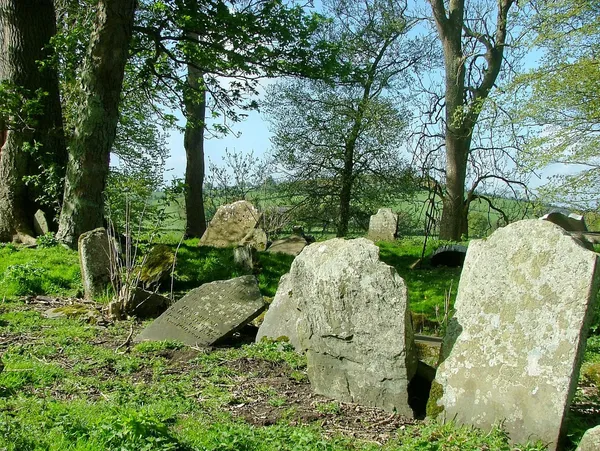
Colbinstown, kildare
Killeen Cormac, on the Kildare–Wicklow border near Colbinstown, holds seven ogham stones – one of the densest clusters in Ireland. Once thought prehistoric, it was shown by 1929 excavation to be an early Christian church and graveyard, wrapped in the folklore of Cormac Mac Airt.

Rathangan, kildare
Rathangan takes its name from a big early-medieval ringfort – some 55 metres across and 13 metres high – that still rises above the town where the Slate River meets the Grand Canal. The flat towpath makes for easy walking and angling, and it's a handy base for Killinthomas Wood, the Bog of Allen and Lullymore Heritage Park.
Kildare, kildare
Brigid founded her monastery on this Kildare hilltop around 480 AD. The cathedral standing there now is Norman, begun by Bishop Ralph of Bristol in 1223, and beside it rises a round tower. Check current access and ask about the tower climb before travelling.

Taghadoe, kildare
A nearly 20-metre round tower, missing only its cap, stands over the roofless shell of an 1831 church and a centuries-old graveyard at Taghadoe, near Maynooth. It is a free, unguided OPW national monument – but the lay-by sits on a blind bend, so park with care.
Bodenstown Graveyard, kildare
Knockaulin Hill, kildare
meath
Kildare, kildare
Naas, kildare
Moone, kildare
← All things to do in County Kildare
Book tours & tickets
We may earn a commission if you book through this link, at no extra cost to you.
Book tours, skip-the-line tickets and day trips with GetYourGuide. Free cancellation on most experiences.
See tours & tickets in County Kildare →