
Overview
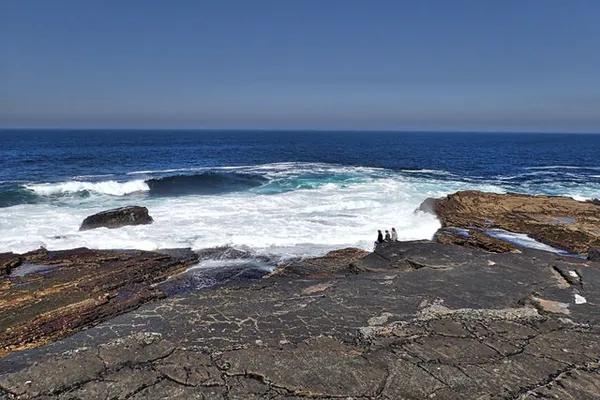
At the West End of Kilkee in County Clare, the limestone of Duggerna Reef forms broad, layered shelves at the western entrance to the town’s horseshoe bay. As the tide falls, water remains in the depressions known as the Pollock Holes. The reef takes some of the force out of the open sea, which is why generations of Kilkee people have used this stretch of shore. Waves can still wash over the reef, and wet rock is slippery, so the state of the tide and the sea matters more here than anything else in this article.
History & Local Character
The reef turns up in older accounts as ‘Dogairne’, the rock barrier across the bay mouth, though what the name actually means is not settled. Before modern harbour walls, local fishing boats and pleasure craft used the sheltered water behind the rocks to anchor. The pools take their common name from the small pollock that shelter in them.
The reef also holds a quiet place in local cultural history. Limerick photographer Paul Lynam spent two years tracking the shifting light and moods of the rock pools, later exhibiting his work at Ennis’s Glór Gallery in 2009. His photographs document the reef’s traditional bathing zones – the ladies’ pool, the men’s pool and a general area – capturing how generations of locals have used the space for swimming, socialising and coastal recreation.
Geology & Conservation
The limestone bedrock beneath Duggerna Reef dates back more than 320 million years to the Late Carboniferous period. During this era, sediments washed from a distant landmass were deposited in a vast river delta that eventually formed the Clare coastline. Millions of years of Atlantic weathering have flattened and sculpted the stone into the smooth, stepped platform visible today, carving out the basins that hold the tidal pools.
Leave marine life undisturbed, avoid stepping on exposed anemones or seaweed beds, and do not remove shellfish, urchins or other species from the shore.
Can you swim in the Pollock Holes?
This page cannot tell you that it is safe. The reef sits in open Atlantic water, waves can wash across the rocks, and rising water can cut off the return. The pools are tidal, so what you find depends on the tide and the sea on the day. If you are unsure, enjoy the pools from the shore and stay off the reef.
Before going near the water, check local notices and the Coast Guard water safety advice. Keep off the reef when waves are breaking over it or the tide is rising, keep children within sight, and never swim alone. Wear sturdy shoes, because the limestone surface is uneven and slippery when wet. The pools are home to marine life such as anemones, limpets and small pollock.
Coastal Walks & Nearby Stops
For a view of the coast without going onto the rocks, follow the public path from the West End, stay back from the cliff edge and keep to the path. It gives open Atlantic views along the edge of Kilkee’s bay. It is a straightforward way to see the reef from above, and a good alternative when the sea is rough.
Practical Information
- Getting here – Duggerna Reef is at the West End of Kilkee. Use the public path for views of the coast.
- Tides and sea conditions – Check a local tide table and the sea conditions before you go, and leave the reef if waves begin to break over it or the tide is rising.
- Safety – Wet rock is slippery. Stay back from the cliff edge, keep children within sight, and heed any warning signs. Check the Coast Guard water safety advice.
- Contact – For visitor information, see Discover Ireland or phone +353 85 752 0588.
- Conservation – Leave marine life undisturbed and take nothing from the shore.