
Overview
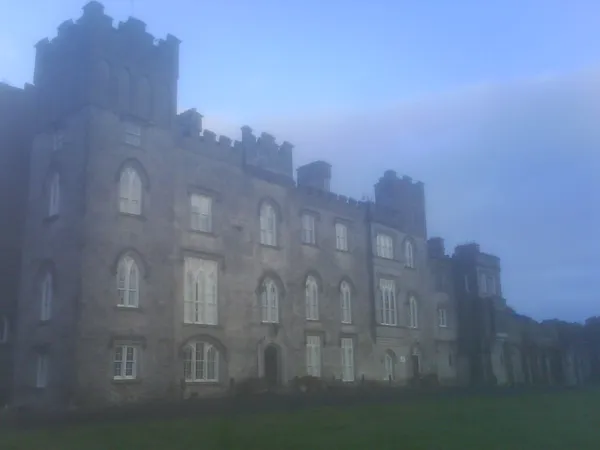
Dunsany Castle is still a family home, not a museum, which is why you cannot simply turn up. It is a private residence near Trim in County Meath. The Plunkett family have lived here since the early 1400s, and the surrounding estate includes a nature reserve where the owners are restoring habitat through rewilding. The result is an unusual combination near the River Boyne: a medieval castle on one side, a deliberately overgrown nature reserve on the other.
The estate is private and has no walk-in access. The castle office handles enquiries for interior tours and publishes the contact for separate rewilding tours. The estate FAQ explains how visits are arranged. Use only the approach and parking confirmed with your booking.
History
The site goes back to 1180-81, when Hugh de Lacy ordered four stone towers around a walled yard, the core of the castle still standing today. It passed from the Cusacks to the Plunketts in the early 1400s and survived the Cromwellian wars and the Land Acts more or less intact.
- Barons of Dunsany – Sir Christopher Plunkett became the first Baron in 1439.
- Lord Dunsany (Edward Plunkett, 18th Baron) – the fantasy author who influenced H. P. Lovecraft and J. R. R. Tolkien. He added an Arts and Crafts extension in 1914.
- Church of St Nicholas – the 15th-century church on the estate appeared in the 1994 film Braveheart.
- Randal Plunkett, 21st Baron – drives the current rewilding programme.
The castle tour
Interior tours are arranged through the castle office. The regular 2026 castle tour season ended in August, so ask about availability and prices for a future date before travelling. Past visitors describe a vaulted principal stairway and a priest’s-hole hall, a dining room hung with family portraits, the Arts and Crafts billiards room, and a Gothic-Revival library with a beehive ceiling. The drawing room keeps its 1780 Stapleton plasterwork. One of the third-floor bedrooms is said to be haunted, which the tour does not oversell.
The demesne
The demesne is the more distinctive half of Dunsany. The estate holds ancient oak groves and rewilded marshland, a walled garden with a gardener’s cottage built into its walls, an ice-house, stone farm yards and the stable yard from the estate’s working past. The Church of St Nicholas, the Braveheart church, is a 15th-century National Monument on the estate. As the estate is private, see these places only as part of an arranged visit.
Rewilding and wildlife
Since taking over, Randal Plunkett has let large areas of the demesne revert to a self-sustaining native ecosystem. Oak and ash are being replanted and wetlands re-flooded. Birds, deer, otters and butterflies and dragonflies in the wet ground are among the wildlife the project aims to encourage. Rewilding tours are arranged separately from castle tours, so ask the reserve team for dates and prices. This is rewilding, not a manicured garden, so expect mud and rough going.
Nearby
- Bective Abbey – 12th-century Cistercian ruin (Bective Abbey). For an independent heritage visit in the area, check the visitor arrangements there.
- Battle of the Boyne Visitor Centre – exhibits on the 1690 battle at Oldbridge House (Battle of the Boyne).
- Brú na Bóinne – the Newgrange and Knowth complex.
- Trim Castle – a large Norman castle nearby (Trim).
Practical information
- Access – Private residence and estate; no walk-in access. Contact the castle office through dunsany.com for interior visits and ask about rewilding tours before you travel.
- Opening times – The regular 2026 castle tour season ended in August. Ask about a future date.
- Admission – Ask the castle office or reserve team for current prices.
- Parking and approach – Use only the approach and parking confirmed with your booking.
- Facilities – Do not assume toilets, a café or other facilities. Ask when you book.
- Accessibility – Ask when booking about the ground and any mobility needs.