
A village with more buried in it than it looks
Gormanston is a quiet commuter village on the Meath–Dublin border, easy to drive straight past on the M1, with a surprising amount of history layered into a small patch of coast and river.
If you stop for one thing, make it the strand and the river mouth. Two groups of Neolithic passage tombs face each other across the mouth of the River Delvin: the Gormanston group on the Meath side and the Bremore group on the Fingal side. Fingal County Council’s archaeological study records two surviving tombs on the north bank. There’s no visitor centre, so they’re easy to miss; come for the setting rather than an interpreted day out. Stick to signed access near the coast and avoid crossing farmland to find the tombs.
The same shoreline gave up a 7-metre prehistoric dugout during the construction of the Ireland–Britain gas pipeline, unusual among Irish boats for what looks like an outrigger design.
The medieval village
The stone road bridge crosses the Delvin at the county boundary. A Fingal survey dates the older upstream part to possibly the 13th century. The bridge has been widened more than once and still carries road traffic. Around it sit a handful of cob cottages, their mud-and-straw walls now hidden under later render. A short way off, St Brigid’s Well at Tobersool is a holy well long visited for cures for eye complaints – a small, quiet spot rather than a destination in itself.
The castle, the college and the foxes
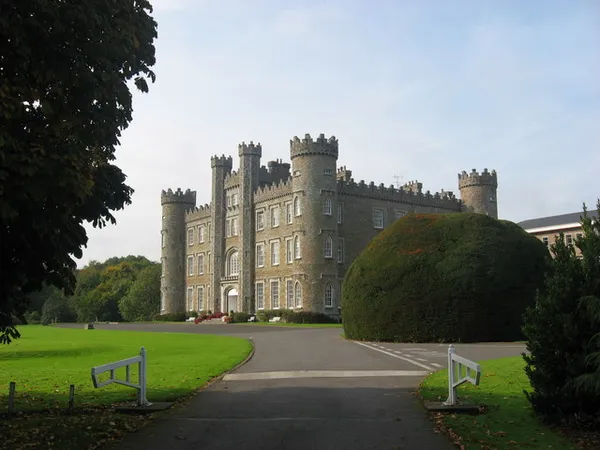
Gormanston Castle’s architectural record dates its origins to around 1363 and the rebuilding that shaped the present house to around 1820. Little survives from before the 19th century except the chapel, which carries the date 1687 above its door. What is genuinely old is the line: the Preston family, Viscounts Gormanston, held the manor from the 14th century until the estate was sold to the Franciscans in 1947.
The best-known story attached to them is the fox legend. As the head of the family lies dying, so it goes, the foxes of Meath – all but the nursing vixens – leave their earths and gather at the castle door to keep vigil, in thanks for a long-ago lord who spared a vixen and her cubs. It was set down in print in The New Ireland Review in 1908.
The Franciscans founded Gormanston College in the grounds. The castle is part of Franciscan College Gormanston, a working secondary school, so it is a school campus and not open to the public. Keep to public roads around the campus and don’t plan a stroll through the estate.
Getting there
Gormanston sits on the M1 and the R132, around half an hour north of Dublin. Iarnród Éireann lists Gormanston on the Northern Commuter line between Dublin and Drogheda; the station opened in May 1845 on the Dublin–Belfast line. The station has paid parking, so check the signage before you leave the car. Check the station’s access notes and contact Irish Rail before travelling if you need assistance to reach the platform or board.
Bus Éireann route 101 connects Dublin and Drogheda via Gormanston. Check which stop it serves for your journey before walking from the coast.
Gormanston Camp, just inland, is a working Defence Forces installation on a former Air Corps aerodrome, so it isn’t open to the public. Follow local signs and stay out of restricted areas near the military camp. If you’re planning to go afloat nearby, check current Department of Transport marine notices for any firing exercises offshore.