
Overview
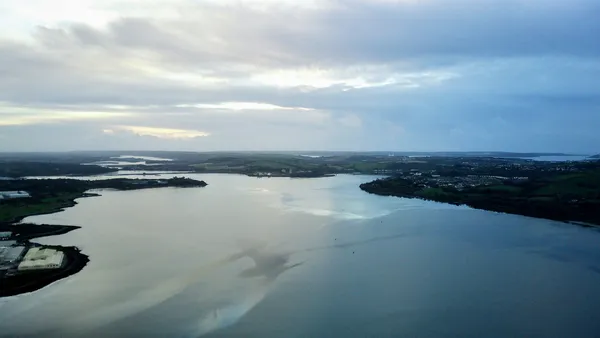
Time a visit to Lough Mahon for low tide and the mudflats fill with feeding waders such as curlew, redshank, oystercatcher and dunlin. Get the tide wrong and you are looking at a wide sheet of water with a suburb behind it. That gap between the good version and the flat one is the thing worth planning around here.
This tidal sea-lough (Irish: Loch Machan) forms the north-western inlet of Cork Harbour, east of the city centre, ringed by Mahon, Douglas, Rochestown, Blackrock and Ballinlough, with the town of Passage West to the south. Little Island sits to the north, the larger Great Island to the east, and the mix of mud, water and suburb makes for an unusual harbour-edge landscape. Inner Lough Mahon is part of the Cork Harbour Special Protection Area, designated under the EU Birds Directive, and the mudflats earn that status as habitat for wintering and migrant waders. For most people, though, the pull is simpler: a shore path you can reach without leaving the city.
The lost lighthouse
Reaching the city quays from the harbour was once genuinely dangerous. The tidal estuary was a maze of shifting mudflats and a meandering River Lee channel, too shallow for deep-draft vessels. Dredging began in the 1820s and accelerated between 1845 and 1860 under the engineer Sir John Benson, who cut a navigable channel through it.
To mark it, Benson designed the Lough Mahon Lighthouse, lit in November 1859. The octagonal iron structure stood on a ring of round wooden piles. A second aid, the Dunkettle Light, followed on the northern shoals in 1862.
The lighthouse came to an end in January 1930, when the SS Ardmore struck the tower in clear weather and demolished it. Nothing of the lighthouse survives; lit buoys now mark the channel.
Birds and the best time to come
The intertidal mud is the draw. Nutrient-rich sediment holds crabs and worms, which bring in the curlew, redshank, oystercatcher and dunlin, with numbers peaking on the spring and autumn migrations when shorebirds stop to refuel.
Watch for wading birds from the path and leave the mudflats undisturbed. Bring binoculars: without them you will see distant specks rather than waders.
Walking, cycling and the water
For a shore walk, follow Cork City Council’s coastal route around the Douglas estuary toward Lough Mahon and Ringmahon Point. The path connects with the Passage Railway Greenway. Follow local signs at junctions and leave space for other walkers and cyclists. Keep clear of the tidal water and mud. The water is tidal and shared with boats, so treat it as something to look at rather than get into. Surfaces and conditions vary along the route, so check the council page before you go. For more route ideas, see the Cycling Holidays guide.
Nearby
Blackrock Castle Observatory sits on the southern shore. Built in 1582 to guard the harbour from pirates and rebuilt in the 19th century, it now runs as an astronomy centre. It is a natural stop either side of a shore walk; check current opening on its own website before you go.
For a bit of history on the ground, Ringmahon House (built around 1820) and the surviving gate tower of Ringmahon Castle stand close to the shore. The wider Mahon area also has Mahon Point Shopping Centre. For families, the Things to do in Cork with Kids guide has more ideas.
Practical information
- Admission: the shore path is a public walkway; check the council page for current details.
- Safety: the water is tidal with boat traffic. Do not swim, and keep clear of the mud, which is deep and dangerous.
- Best time to visit: spring and autumn for the birds.
Check the tide tables before you set out and aim for low water, and pack a light waterproof even on a clear day, because the harbour breeze shifts fast.