
Overview
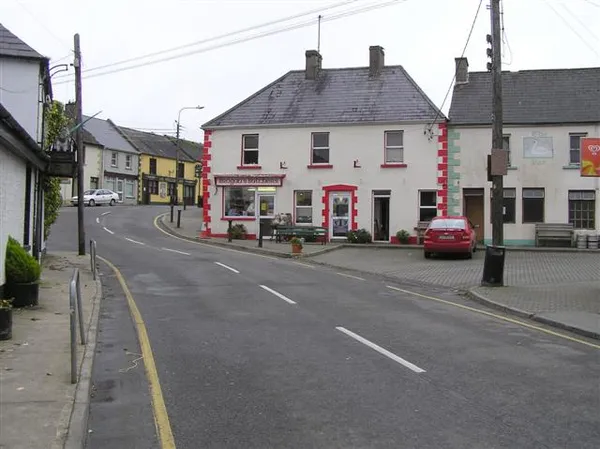
Swanlinbar’s name is a leftover from a business deal. In the early 1700s four ironmasters – Swift, Saunders, Darling and Barry – ran their surnames together into ‘Swandlingbar’; the D and G wore off over the next century, and by 1850 it was Swanlinbar. The Irish name, An Muileann Iarainn, simply means ‘the iron mill’. The village sits on the Cladagh River in north-west County Cavan, hard against the Fermanagh border, and is part of the wider Cuilcagh Lakelands area. Locals call it ‘Swad’. For a visitor it is less a destination than a base, and the Swanlinbar Development Association runs a community hub and a volunteer café in the village.
History
The village was built on iron and water. Four entrepreneurs set up a foundry on the river in 1700, and a 1682 lease marks the start of organised iron-working here, though smelting in the area goes back much further, with Iron Age finds turning up in nearby townlands. The works ran until the oak woods that fed the furnaces were used up.
Then Swanlinbar became a spa. By the 1760s it was a fashionable place to take the waters, with landscaped walks, a breakfast room by the well and, by one account, an ‘excellent ordinary’ for dinner. People came for the sulphur-rich springs, reckoned good for rheumatism, low spirits and bad digestion. George Sackville Cotter put the scene into verse in Epistles from Swanlinbar (1788), and Jonathan Swift had already mocked the founders’ made-up name in a 1728 essay. A fire in 1786 and changing fashions saw the spa fade, and the village slipped back to farming.
What to see and do
The spa heritage
The old spa well at Dromod Glebe (also called Drumbrughas) is the village’s best-known link to its spa days. There is no visitor centre, and the water is sulphurous. Treat it as local heritage to read about rather than a place to drink from or to cross farmland to reach.
Tullydermot Falls
The Cuilcagh Lakelands Geopark lists an official car park and access path at Tullydermot Falls, a set of cascades in a wooded glen south-west of the village. Use the signed visitor path and keep back from fast water and slippery rocks.
Cuilcagh Mountain and the boardwalk
The village is the nearest base for the Cuilcagh Boardwalk, known as the ‘Stairway to Heaven’, which crosses blanket bog towards a stepped ascent high on Cuilcagh Mountain in the Cuilcagh Lakelands Geopark. Parking and trail arrangements change, so check the Geopark’s visitor information before you go, and wear proper boots. On a clear day the top gives views over Lough Erne and the drumlins. Leave farm entrances and private routes clear.
Altachullion Viewpoint
On the R200 between Derrynacreeve and Glangevlin, Altachullion looks out over Cuilcagh Mountain on one side and the rolling drumlin lowlands on the other.
Wildlife
The drumlins and river valleys around the village are good for hares, skylarks and wintering curlews.
Community and culture
Village life runs on volunteer energy. The Cuilcagh Café & Garden is staffed by volunteers, with profits going back into the community; check with the village before you rely on it being open. Trivia House, a converted community building, holds a self-catering let and a digital hub for remote workers. Swanlinbar St Mary’s keeps the GAA going.
Nearby attractions
- Marble Arch Caves – limestone show caves in County Fermanagh.
- Annagh Lake – swimming, angling and walking, with a historic crannóg (see Annagh Lake).
- Ballyconnell Bridge and Canal Walk – a stone bridge and towpath on the Shannon–Erne Waterway (see Ballyconnell).
- Dowra Courthouse – a 19th-century Gothic Revival building.
- Altachullion Viewpoint – on the R200 between Derrynacreeve and Glangevlin.
Practical information
Getting there
Swanlinbar is on the N87 and is easiest reached by car. Bus services in the area change, so check current timetables for Cavan and Enniskillen before you travel.
Amenities and services
The village has a post office, a small shop and a pub. For banks, supermarkets and medical services, head to Ballyconnell or Enniskillen. The village website, swanlinbar.ie, has local information.
When to go
Trails see most footfall from April to September, when it is drier and the evenings are long. Autumn colours the drumlins; winter strips them bare. Bring waterproofs and boots whatever the month, as weather in the Cuilcagh foothills turns fast.