
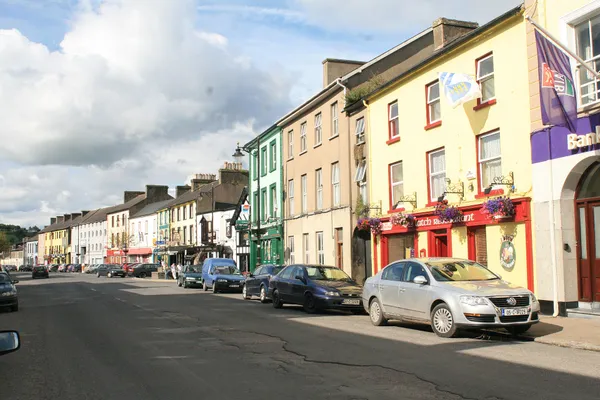
Overview
Tallow lies near the Cork–Waterford border. Its Irish name, Tulach an Iarainn, means ‘hill of the iron’, and it earned it. In the early 1600s Richard Boyle, 1st Earl of Cork, bought up the surrounding estates and invested in smelting, and the town became a centre of ironworking. The oak woods that fed the furnaces were exhausted by about 1687 and the industry died with them, but the name stuck.
So this is a town that was industrial before most of Ireland was, and has spent the centuries since quietly doing other things. When the iron stopped, grain went down the River Bride to Youghal; wool combing and lace-making arrived in the 1800s. Tallow sat as a parliamentary borough from 1613 until the Act of Union in 1801. Today it’s a working market town, handy as a base for Dungarvan, Cappoquin and the south Waterford coast, all a short drive off.
One story worth carrying with you: during the Land War in 1887, the local MP Douglas Pyne shut himself inside Lisfinny Castle, the Desmonds’ 15th-century tower house above the valley, after a warrant went out for his arrest, and slipped away past the police cordon with help from his supporters.
The church, the convent and the library

The Church of the Immaculate Conception on Chapel Street dominates the town. The Buildings of Ireland record describes a square tower, pointed windows and decorative iron gates. The church dates from 1826. View it from the public street, or check the parish’s service arrangements if you plan to go inside.
Up on Convent Street, St Joseph’s Carmelite Monastery was founded in 1836. The old convent was demolished in 1996 and the present monastery opened in March 1997; the enclosed Carmelite community still runs a small printing press for Mass and memorial cards. Check the parish for Mass times and whether the chapel is open to visitors.
For local history, Tallow Library is one of County Waterford’s original Carnegie libraries, opened in 1910 and now run from the Tallow Enterprise Centre. It holds local archives, including digitised burial registers from the surrounding parishes. If you’re tracing Waterford or east Cork ancestry, contact the library before you travel to confirm opening times and have the records ready.
The horse fair and the walks
The Tallow Horse Fair has run since 1910 and takes over the town. Main Street closes, and caravans, livestock pens and dealers fill it. It is the day to come if you want the town at full tilt rather than at rest. Check the date locally before you plan a trip, as it may move.
The rest of the year, the walking is the draw. The Ramp Boreen Walk, a gravel path opened in 2010, links the eastern and western ends of town and is the local route for charity walks. Down at the water, flat riverside trails follow the Bride from the town centre. The poet Edmund Spenser is said to have written part of The Faerie Queene along these banks, near Tallow Bridge – take that with the pinch of salt any ‘reputedly’ deserves. Check locally for current walking access before you set out.
Two other local names worth knowing: the footballer Mick McCarthy, former Republic of Ireland captain and manager, has family roots here, and Tallow’s GAA club, going since at least 1887, plays at Páirc Éamonn de Paor and has county honours to its name.
Food and drink
Main Street has the usual run of pubs, cafés and small shops. What’s worth seeking out is the local produce, including Knockanore cheese, Deise honey, Barron’s bread and O’Flynn’s sausages, sold in local shops and served in the eateries around town.
Getting there and parking
Tallow sits where the R627, R628 and R634 meet, an easy drive from Waterford, Cork, Fermoy and Midleton. The former Tallow Road railway station ran from 1872 to 1967 and is long closed.
There are public car parks and on-street spaces in the town centre; check signs locally. Local Link route 363 serves Tallow on the Dungarvan–Fermoy corridor. Check which journeys continue to Fermoy, and plan your return before you go. The main streets are level and easy underfoot.