
Overview
The Bride is a fishing river first and a walking river almost by accident. It runs 64 km from the hills of north Cork to meet the Munster Blackwater at Camphire in County Waterford, just above Youghal, and it holds brown trout. What it doesn’t have is a riverside trail: following the water means linking country lanes and roadside viewpoints, and access to the banks varies from place to place. This is a working farmland river, not a touristed one, and that is most of its appeal.
History and literary tradition
Before the roads, the Bride and the Blackwater were the local highway. Early maps show a string of watermills, fords and stone bridges along the banks, the residue of centuries of farm trade. Its lower reaches thread the old baronies of Barrymore and Imokilly, and the river still lends its name to Bride Rovers GAA, the club of Rathcormac and Bartlemy.
Conna Bridge
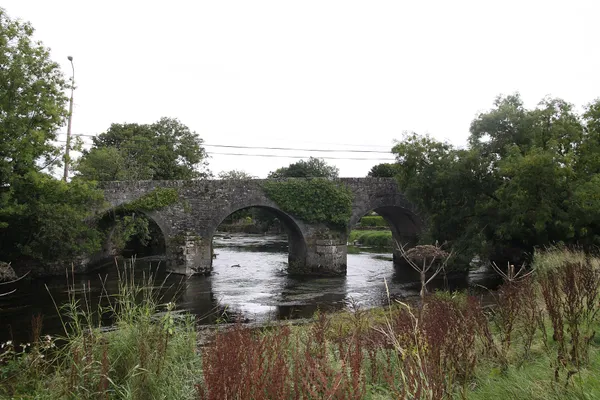
At Conna the river passes beneath a five-arched stone bridge. The National Inventory of Architectural Heritage dates it to around 1770 and records widening around 1825. Use public paths or safe roadside viewpoints, keep clear of traffic and stay out of private field entrances.
Edmund Spenser
The literary footnote is Edmund Spenser. Local tradition holds that the Elizabethan poet wrote parts of The Faerie Queene on the banks near Conna. The records don’t pin down his movements, so treat it as tradition rather than fact.
Angling on the Bride
Fly fishing is the main draw. Above Rathcormac the water is faster, in clear riffles that suit nymph and wet-fly work. As it slows through the middle section, deeper pools form behind old mill weirs and fallen timber. The river turns tidal at Tallow Bridge, and below it the salt-influenced water brings in sea trout.
Inland Fisheries Ireland lists the River Bride as catch-and-release only in 2026 for salmon of any size and sea trout over 40 cm. Check IFI’s rules before fishing in later seasons. Confirm permission and any permit for the stretch and species before you fish, and respect private land. Levels rise fast after Atlantic rain, so check recent river conditions before you set out.
Villages and riverside walks
The Bride threads through several old settlements, each a different angle on the water:
- Rathcormac: the upper river runs past this quiet market town.
- Castlelyons: a medieval ringfort and ruined castle sit on a gentle bend of the river.
- Conna: the small crossroads village where the Spenser tradition is strongest and where the five-arched bridge crosses the river.
- Tallow: the last village before the tidal stretch. Tallow Bridge, a sturdy 19th-century structure, gives a clear view of the river turning from fresh to estuary, with marshy margins that attract wading birds.
There is no single waymarked trail along the river, so check what is open to the public before choosing a route. Some bank sections turn soft after rain, so cyclists are usually better off on the adjacent lanes.
Wildlife
The banks carry a steady turnover of wildlife, busiest during migration and breeding. Kingfishers work the clearer stretches, grey herons stand motionless at the edges of slow pools, and otters have been recorded in the middle reaches. Spring brings the smolt run, as young salmon and trout move downstream to the sea. Early morning pays off in the hedgerows and woodland copses.
Practical information
- Access: access to riverbanks varies, so use public paths and roadside viewpoints and respect private land. Tidal mudflats are unsuitable as a walking route.
- Fishing: confirm permission and any permit for the stretch and species, and check IFI’s rules for the current season.
- Best conditions: spring and early summer usually give the most reliable levels and insect activity. Autumn clears the visibility for wildlife.
Getting there
The Bride is within reach of Cork City (about 30 km north) via the M8 to Rathcormac, or from Waterford City via the N25 to Tallow and Conna. A car is far more practical for the quieter stretches. For the tidal section near Tallow, check the tide tables first.