Historic Sites in County Cork

Two groups account for most of the 48 places on this page. The first is military: Charles Fort at Kinsale, a pentagonal star fort of the 1670s whose restored ramparts look out over the harbour mouth, with the older James Fort free and open across the water at Castlepark. Further east, Camden Fort Meagher at Crosshaven and Fort Carlisle at Whitegate face each other across the entrance to Cork Harbour, both of them Victorian gun batteries; roughly two-thirds of Camden Fort is underground, in tunnels and magazines cut into the headland.

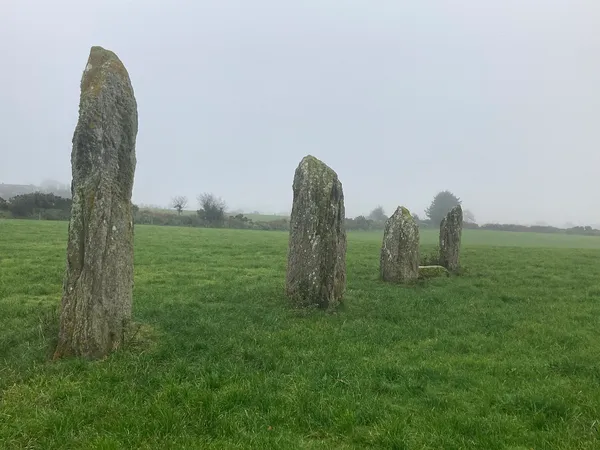
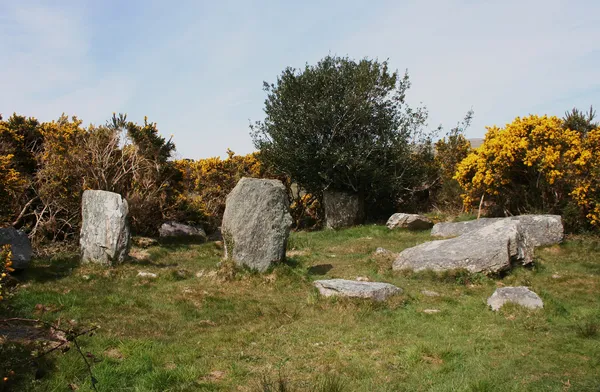
The second group is prehistoric and sits almost entirely in West Cork. Drombeg Stone Circle stands on a ridge above the sea near Glandore, thirteen of its original seventeen stones still up, with the midwinter sun dropping into the low axial stone. The Altar Wedge Tomb is further west again on the Mizen, metres from the water at Toormore Bay. Knockdrum’s hilltop cashel and Knocknakilla on the boggy north-west slopes of Musherabeg Mountain are unguided and reached on rough ground, so pick your weather for those two.

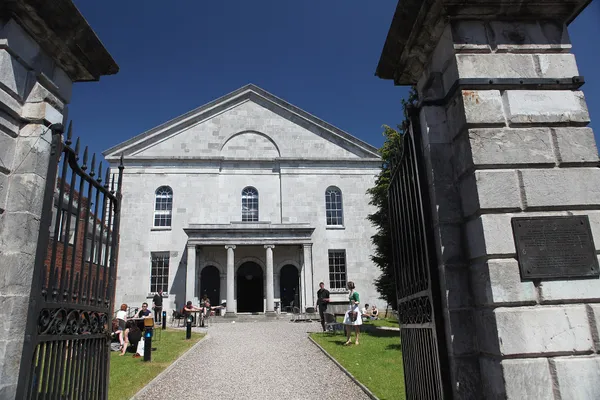
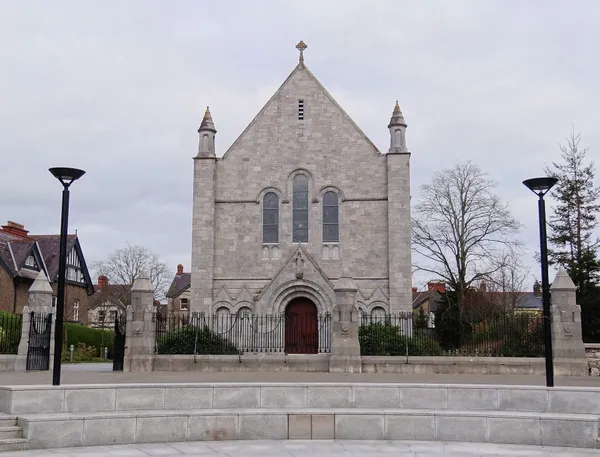
Cork city holds the English Market, trading on the same site since 1788, and Saints Peter and Paul’s on a lane off St Patrick’s Street, a few minutes apart on foot. The east of the county is thinner: the Clock Gate Tower over Youghal’s main street, and Araglin out beyond Fermoy where three counties meet.

Where to start

  1. Charles Fort – Kinsale’s star fort Kinsale

    A pentagonal star fort of the 1670s above Kinsale Harbour, with restored ramparts to walk and an OPW tour covering the 1690 siege.

  2. English Market – Cork's covered food hall Cork city

    Trading on the same city-centre site since 1788, a Victorian covered food hall for spiced beef, drisheen and fish, with the Farmgate Café upstairs.

  3. Drombeg Stone Circle – the Druid’s Altar Glandore

    Thirteen standing stones on a ridge above the sea near Glandore, aligned so the midwinter sun sets into the low axial stone.

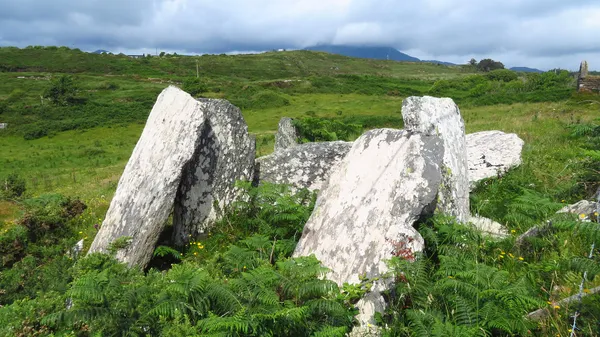
  4. Altar Wedge Tomb – grave and Mass Rock Toormore Bay

    Built around 2500 BC and standing metres from the Atlantic on the Mizen, a trapezoidal gallery grave still carrying its massive capstone.

42 of 48 shown — tap a pin for the place.

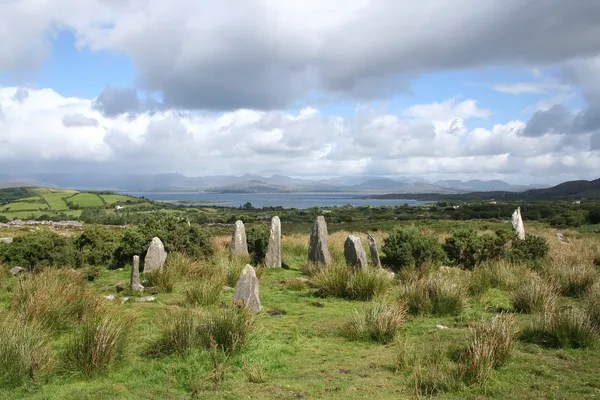
Ardgroom Stone Circle
Ardgroom Stone Circle Ingo Mehling / Wikimedia Commons / CC BY-SA 3.0

Ardgroom – Beara's tapering stone circle

Beara Peninsula, cork

Ardgroom is a brightly painted village on the Ring of Beara, best known for its Bronze Age stone circle a mile east, where the upright stones taper unusually to points. The circle sits in a working sheep farm reached by a boggy field walk, with parking for only about three cars. The village itself has a shop, a pub and Harrington's post-office café, and the easy Pulleen coastal loop starts nearby at Cuas Quay.

🌳 Outdoor 🅿️ Free Parking
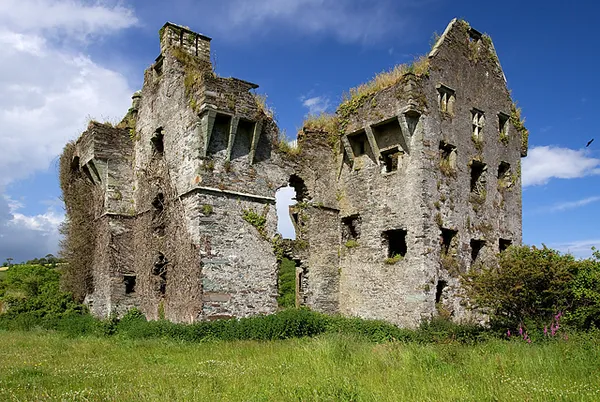
Castles of Munster, Coppingers Court, Cork - geograph.org.uk - 1392905
Castles of Munster, Coppingers Court, Cork - geograph.org.uk - 1392905 Mike Searle / Wikimedia Commons / CC BY-SA 2.0

Coppinger's Court – ruined Cork stronghouse

Ballyvireen Valley, cork

Coppinger's Court was among the grandest houses in early-17th-century Cork before the 1641 rebellion left it a gutted shell. Built by the merchant Sir Walter Coppinger, its ivy-clad walls and nine gables still rise from the Ballyvireen valley west of Rosscarbery. The ruin sits on private farmland but can be visited freely, and it comes with more legends than most.

🌳 Outdoor
Cove Fort Cork Harbour from Charles Vallancey Survey 1777
Cove Fort Cork Harbour from Charles Vallancey Survey 1777 Charles Vallancey / Wikimedia Commons / Public domain

Cove Fort – Cobh's Titanic memorial

Carrignafoy, cork

Cove Fort is a small star-shaped battery built east of Cobh in 1743 to guard the entrance to Cork Harbour. It later became the Queenstown Military Hospital, and today the Port of Cork occupies part of the site – the public draw is Bishop Roche Park and the Cobh Titanic Memorial Garden, which names the 123 passengers who boarded the Titanic here in 1912. There's no visitor centre or tour; come for the memorial, the view and the story.

🌳 Outdoor 🅿️ Free Parking 🐕 Dogs Welcome
Summercove area in Kinsale during stormy weather
Summercove area in Kinsale during stormy weather Podstawko / Wikimedia Commons / CC0

Summercove – Charles Fort and The Bulman

Summercove, cork

Summercove is a small harbour village near Kinsale, and it comes down to two things: Charles Fort, the huge star-shaped fortress completed in 1682 on the headland above, and The Bulman, the orange pub at the water's edge. The signed Scilly Walk from Kinsale leads there. The fort is ticketed, so it is not the free wander some guides suggest.

🌳 Outdoor

Questions people ask

If I only have time for one fort, which should it be?
Charles Fort at Kinsale, for the restored ramparts and the guided siege story. James Fort across the estuary at Castlepark is free and open-air if you would rather just walk. For something different, Camden Fort Meagher at Crosshaven is largely underground.
Where are the stone circles and tombs on this page?
Almost all in West Cork. Drombeg is above Glandore, the Altar Wedge Tomb is on the Mizen at Toormore Bay, Knockdrum sits on a hilltop nearby, and Knocknakilla is inland on Musherabeg Mountain. You will need a car between them.
What can I see without leaving Cork city?
The English Market under its cast iron and stained glass roof, and Saints Peter and Paul's Church on a lane off St Patrick's Street, where the 36-ton Carrara marble altar is the reason to go in. Both are central and free to enter.
Which of these are free and always open?
James Fort is free and open-air. Béal na Bláth, the bend on the R585 where Michael Collins was killed, is free and always open. Knocknakilla is an unguided National Monument with no gate. Saints Peter and Paul's is open free most of the day.
Does the time of year matter for the prehistoric sites?
For the alignments, yes. Drombeg's axial stone catches the midwinter sunset, and the Altar Wedge Tomb's ENE to WSW line catches the Samhain sunset over Mizen Peak. Otherwise it is ground conditions that decide: Knocknakilla is boggy mountain ground.

← All things to do in County Cork

Book tours & tickets

Powered by GetYourGuide

We may earn a commission if you book through this link, at no extra cost to you.

Book tours, skip-the-line tickets and day trips with GetYourGuide. Free cancellation on most experiences.

See tours & tickets in County Cork →
Advertisement